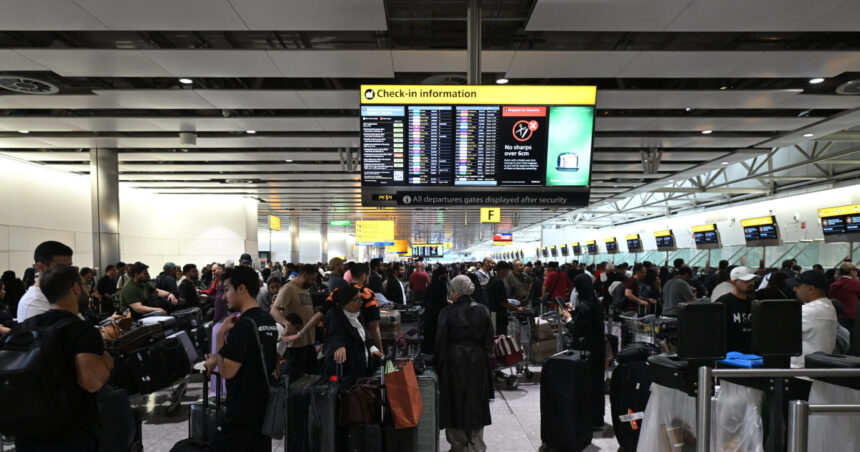
Airports across Europe, notably London Heathrow—the region’s busiest—are making strides to restore normal operations following a cyberattack on Saturday that disrupted automated check-in systems. The attack targeted Collins Aerospace, a provider of check-in and boarding systems owned by RTX. The incident caused significant delays and cancellations at major airports including Heathrow, Berlin Brandenburg Airport, and Brussels Airport.
By early Sunday, the situation showed signs of improvement, although some delays persisted, according to reports from airport officials and real-time data. Regulatory bodies have launched investigations to determine the source of the cyberattack.
At Brussels Airport, 45 out of 257 scheduled departing flights were cancelled. Despite this, operational adjustments helped maintain relatively short waiting times for passengers. A spokesperson mentioned that delays ranged between 30 and 90 minutes but cautioned that the duration of ongoing disruptions was still uncertain. One traveler flying from Brussels noted that the impact was minimal for him, attributing the challenges primarily to those who had not opted for online check-in or needed to check bags.
This incident marks the latest in a series of cyberattacks affecting diverse sectors, including healthcare and automotive industries. A previous breach at Jaguar Land Rover forced a halt in production, and another incident affected Marks & Spencer with substantial financial losses.
RTX described the event as a “cyber-related disruption” that affected its MUSE software, utilized by several airlines. However, the company did not provide immediate commentary on the situation.
Berlin Brandenburg Airport reported ongoing problems but stated that they were collaborating with Collins Aerospace to resolve the issues. A manual workaround has been implemented, and currently, there are no significant delays or cancellations reported.
Heathrow Airlines indicated that they were working diligently to recover from the outage in their check-in systems, assuring that the majority of flights continued to operate despite the challenges. An analysis by aviation data provider Cirium highlighted that delays at Heathrow were categorized as low, while Berlin experienced moderate delays, and Brussels saw significant but decreasing delays.