The largest Bitcoin mining company in the world has recently shifted gears, becoming the most significant seller of Bitcoin. Marathon Digital Holdings (MARA) has sold 15,133 Bitcoin for a staggering $1.1 billion over the past three weeks, leaving the company with 38,689 Bitcoin valued at approximately $2.3 billion.
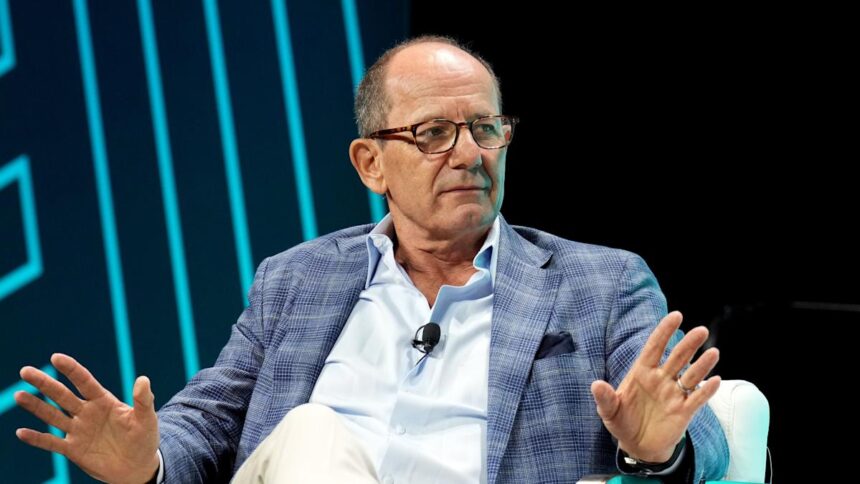
CEO Fred Thiel explained this strategic move, stating that the decision to sell a portion of their Bitcoin holdings is aimed at strengthening the company’s balance sheet and positioning it for long-term growth. “Our decision reflects a strategic capital allocation move designed to enhance financial flexibility,” Thiel commented, highlighting the company’s expansion beyond traditional Bitcoin mining into sectors like digital energy and AI/high-performance computing infrastructure. This pivot suggests a significant change in focus: as the profitability of Bitcoin mining declines, the demand for energy to power artificial intelligence is on the rise.
Currently, MARA’s stock trades at around $8.50, marking an increase of approximately 3.5%, according to Yahoo Finance. However, the company has slipped to third place in Bitcoin treasury holdings, with Jack Mallers’ Twenty One Capital now holding the second position. MARA’s recent sale reflects a broader trend, as it becomes the largest player in a significant transition within the Bitcoin mining sector towards artificial intelligence infrastructure.
This shift isn’t isolated; other major U.S. Bitcoin miners have already initiated similar transitions. Analysts from Bernstein have noted that mining has turned significantly unprofitable following the recent Bitcoin halving event, which occurs every four years and cut block rewards in half to 3.125 Bitcoin per block. The situation has become dire as transaction fees have decreased due to Bitcoin being locked in exchange-traded funds rather than being actively traded on-chain.
Consequently, while Bitcoin has been trading around $69,000, companies that once profited from mining it at $50,000 are now facing challenges in breaking even at even higher price points. The demand for energy to support AI operations, however, has surged, with companies willing to pay premium prices for the necessary power capacity.
MARA’s recent Bitcoin sale is emblematic of this significant trend. For instance, Core Scientific has secured a contract for 590 megawatts with AI cloud provider CoreWeave, aiming to generate $10 billion in revenue over 12 years. Similarly, IREN is targeting more than half a billion dollars in annualized revenue from AI cloud services by 2026. Even CleanSpark, which had focused solely on Bitcoin mining, has appointed a senior vice president for AI data centers as part of this transition.
Despite these moves, some miners are facing pressure from shareholders to accelerate their pivot toward AI. However, transitioning to AI does not come with guaranteed success. The rapidly evolving landscape of AI has begun to draw scrutiny from investors, raising questions about whether companies like OpenAI can successfully execute their ambitious plans.
Market observers, such as Matthew Sigel, head of digital assets research at VanEck, have noted that the skepticism surrounding AI initiatives has also infiltrated the Bitcoin mining sector, adding further layers of uncertainty to the industry’s future. As the landscape shifts, the focus on profitability and strategic adaptation will likely shape the next phase of developments in both Bitcoin mining and AI infrastructure.