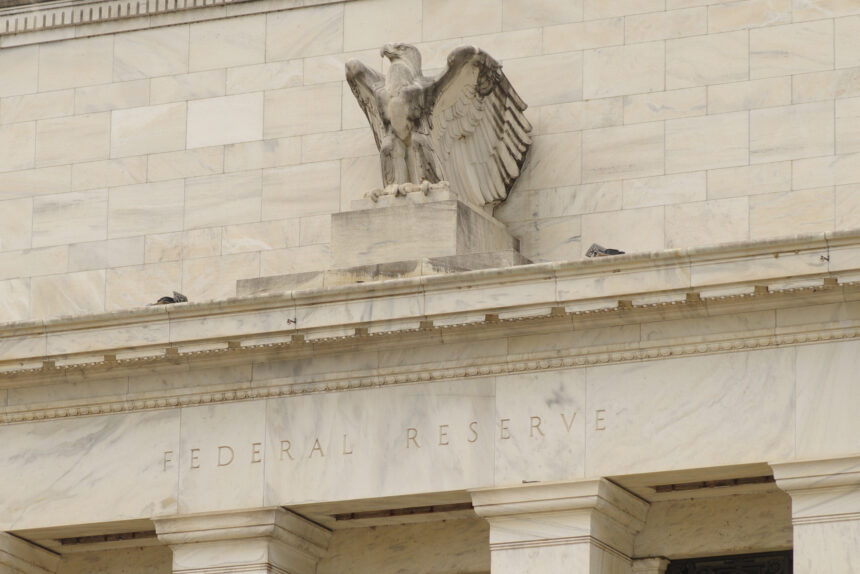
The Federal Reserve is widely anticipated to implement a 25 basis point rate cut at its upcoming Federal Open Market Committee (FOMC) meeting next week. This decision is driven by several key economic indicators and concerns, primarily surrounding inflation trends and labor market dynamics.
Recent data revealed that the Consumer Price Index (CPI) for August slightly surpassed expectations, rising by 0.4% month-over-month against a forecast of 0.3%. This increase was attributed to continued pressures from core services, shelter, and energy costs. While the inflation readings did not alter the annualized figures significantly, core CPI remains relatively stable. A notable point of interest was the “supercore” services, which only saw a modest rise of 0.33%, compared to 0.48% in July. These figures suggest that more conservative members of the Federal Reserve board may be hesitant to pursue more aggressive rate cuts at this time.
Additionally, labor market conditions are raising alarms. The Bureau of Labor Statistics recently revised its estimate for nonfarm payrolls downward by 911,000, implying a potential decline in job growth that may have begun as early as spring 2024. This adjustment indicates that the business cycle reached its peak earlier than previously thought in the second quarter of 2024, with recent economic data suggesting a prolonged downturn in the labor market.
The housing sector poses another significant risk for the overall economy, as both home construction and permits have plummeted to multi-year lows while median home prices have increased by 2.9% year-over-year. This conflicting landscape, combined with deteriorating labor market data, raises concerns about the potential consequences of sustained high interest rates on the economy.
Critics point out that a 50 basis point cut at this juncture would imply an admission that previous monetary policies have been excessively restrictive, undermining the Fed’s months-long commitment to a “data-dependent” strategy. A more cautious incremental approach allows the Committee to respond to forthcoming labor and inflation data without locking into aggressive rate cuts.
In the realm of digital asset markets, the dynamics of Digital Asset Treasuries (DATs) are evolving. Most DATs have seen their marked net asset values converge toward parity, particularly Ethereum (ETH) DATs, indicating that the speculative premiums associated with these assets are diminishing. The weighted average mNAV for ETH DATs has plummeted from over five times their underlying asset value earlier this summer to below one by early September. This trend suggests that investors are beginning to view ETH DATs as more stable pass-through mechanisms to reserve holdings rather than vehicles for speculative investment.
Trading volumes for DATs have also declined, dropping approximately 55% over the week as the story surrounding DATs fades and valuations stabilize closer to net asset value. This shift in trading behavior coincides with macroeconomic uncertainty, as volatility in sentiment leads to reduced enthusiasm among market participants.
Moreover, the recent security concerns regarding the Node Package Manager (NPM) have left decentralized finance (DeFi) total value locked (TVL) numbers largely unaffected, even as fears of a major supply chain attack spread. While the NPM incident raised alarm over compromised code, the actual on-chain impact remained minimal, underscoring a growing desensitization among retail users toward such hacks.
On another front, stablecoin operators are currently competing to issue a new USDH stablecoin for Hyperliquid, a decentralized perpetual exchange. These companies are proposing to share substantial yields with their ecosystems, potentially impacting the HYPE token’s value through buybacks and deflationary pressures.
As the market digests these developments, crypto asset prices have seen positive momentum, with Bitcoin holding near $114,000 and Ether around $4,400, largely bolstered by a prevailing “risk-on” sentiment stemming from expectations of an imminent rate cut from the Federal Reserve. Despite a general trend of reduced exposure in the lead-up to September, which is historically characterized by weaker performance for risk assets, recent positive dynamics have prompted a resurgence of capital into the market.
Looking ahead, market participants are poised for several significant macroeconomic indicators, notably US retail sales and the FOMC rate decision, which could further shape trading activity and sentiment in both traditional and crypto markets.