









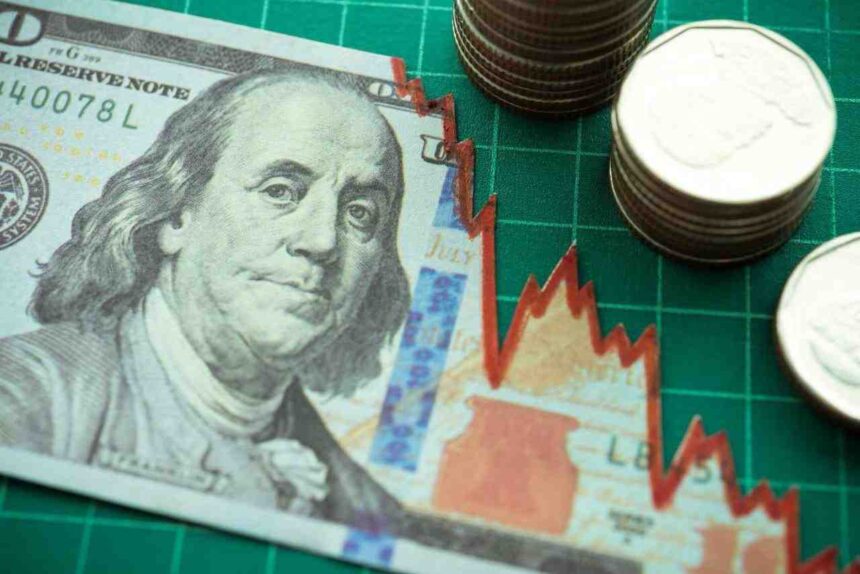
In a recent discussion, Harry Dent, founder of HS Dent investment firm, delivered a stark warning about the future of financial markets, predicting that a catastrophic market crash is looming in 2026. During his conversation with David Lin, the market expert asserted that the current market bubble, which has been developing for nearly 17 years, is on the verge of bursting, potentially leading to a staggering 90% decline in stock prices. He characterized this impending downturn as the worst since the Great Depression.
Dent’s analysis suggests that the speculative excess impacting today’s markets is not confined to artificial intelligence (AI), a subject that has dominated recent discussions regarding market valuations. Instead, he posited that equities, real estate, and even digital assets are entrenched in what he describes as a debt-fueled super-bubble.
He explained that this bubble differs significantly from past financial crises; it commenced in 2009, not allowing for a complete economic reset as in previous cycles. Dent argues that after the 2008 financial crisis, policymakers intervened aggressively, circumventing a natural economic downturn that would have otherwise culminated in a thorough cleansing of debt and financial instability. According to him, this intervention not only prolonged the current expansion but also set the stage for an eventual and severe market correction.
A key aspect of Dent’s analysis concerns the cryptocurrency Bitcoin, which he considers a critical barometer for the overall market conditions. He pointed out that Bitcoin has experienced a notable drop—approximately 30% since its recent peak—and that this trajectory mirrors historical patterns observed during previous market cycles. Over the years, Bitcoin has never posted new highs following the peak of its four-year cycles and has consistently registered declines of at least 77% in the year following such peaks.
Dent made projections regarding Bitcoin’s future performance, suggesting it could plummet to around $30,000 by the end of 2026, with a potential low of $15,600, a figure reminiscent of 2022’s market conditions.
While acknowledging AI’s transformative capabilities, Dent cautioned that stocks in the AI sector, particularly leaders like Nvidia, exhibit behaviors typical of a late-stage market bubble. He likened the current situation to the dot-com boom, where companies like Cisco became central to speculative excess as markets approached their peaks.
Looking toward early 2026, particularly January, Dent emphasized the importance of market performance during this period. Historically, strong performance in January has been a precursor to positive annual outcomes for equities. Conversely, a weak January could further solidify his bearish outlook.
Dent concluded with a grim assessment of the current financial landscape, echoing a common theme in financial history: every significant speculative bubble ultimately leads to notable losses. He expressed that the current bubble “is off the charts” in terms of excess and volatility.
In a divergence from some predictions in the economic space, particularly from figures like Peter Schiff who anticipates an unprecedented dollar crash in 2026, Dent maintained that Treasury bonds would remain the only asset likely to endure, as the government can print money to fulfill obligations linked to them.