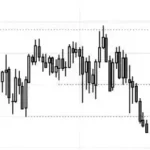
The crypto market is currently reflecting historical trends and patterns, as highlighted by Michael Terpin, CEO of Transform Ventures. Speaking at Consensus Hong Kong 2026, Terpin expressed skepticism regarding recent overly optimistic predictions concerning Bitcoin’s future. He criticized those who suggested that Bitcoin would hit a bottom at $80,000 in a brief six-week bear market, calling such projections unreasonable. Similarly, he dismissed predictions that the cryptocurrency would stabilize at $60,000 and quickly rebound, calling that timeline premature as well.
While Terpin refrained from predicting another lengthy downturn akin to past market corrections, he indicated that the market is still in a “fragile environment” and may experience “one more point of pain.” He speculated that Bitcoin could revisit the $50,000s or even dip into the $40,000s before establishing a sustainable bottom.
Central to Bitcoin’s architecture is the halving mechanism, which occurs approximately every four years. This event halves the mining rewards for transaction verification, thus slowing down the creation of new coins. This built-in supply shock enhances Bitcoin’s scarcity and is a critical aspect of its valuation. Historically, halving events have preceded significant bull markets, as decreased supply often meets steady or increasing demand. Over time, this mechanism reduces Bitcoin’s inflation rate, ultimately capping its total supply at 21 million coins and promoting its status as “digital gold.”
“We are exactly where we should be,” Terpin suggested, reaffirming that current market conditions align with established four-year cycles linked to Bitcoin’s halving events. He explained that historical data illustrates a reliable pattern regarding market peaks and subsequent downturns. “The bull market typically peaks in the fourth quarter after the halving,” he noted, observing that the speculative phase usually lasts between nine to eleven months, with this recent cycle extending to eleven months.
Terpin pointed to the last market cycle as a notable comparison. He observed that market peaks and troughs remarkably coincided with significant events, such as the high point on November 10, 2021, and the low following the FTX bankruptcy announcement on November 10, 2022. This symmetry was not lost on him; he highlighted that even the broader four-year rhythm displayed remarkable consistency, with one complete cycle only deviating by three days from the expected four-year timeline.
Notably, Terpin’s insights align with ongoing discussions in the crypto community, including observations from crypto asset manager Bitwise, which posits that Bitcoin may break its established four-year cycle by 2026. As the market continues to evolve, all eyes will remain on how Bitcoin navigates these next critical phases.