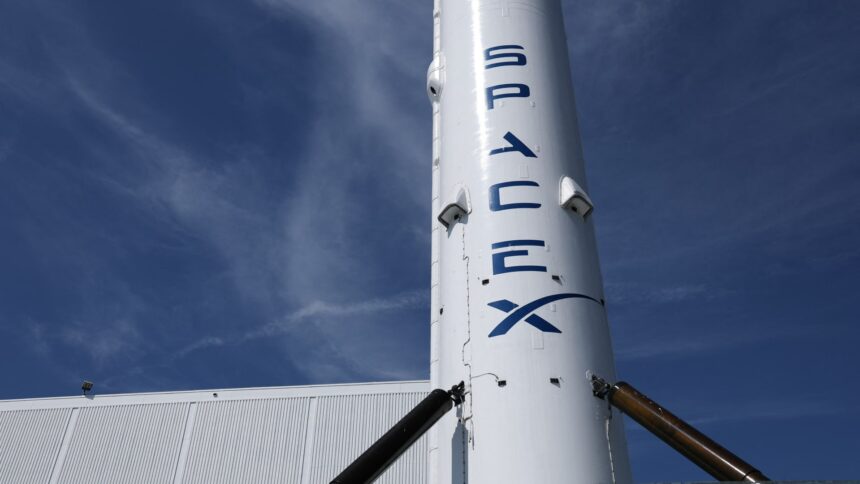
As the financial landscape braces itself for a trio of significant initial public offerings (IPOs)—SpaceX, OpenAI, and Anthropic—the prevailing sentiment among analysts is one of concern regarding the market’s ability to absorb the influx of capital required by these companies. While the potential valuations of these firms are staggering, with estimates reaching as high as $2 trillion for SpaceX and $830 billion for OpenAI, the question of funding remains pressing.
Currently, the valuations of these tech giants, which often appear to skyrocket without substantial financial backing or profit-generating plans, are predominantly being shaped by institutional investors with seemingly limitless resources. An assessment of OpenAI’s rapid ascent from a $500 billion to an $830 billion valuation—driven primarily by user growth—has raised eyebrows. The methodologies behind these valuations lack traditional metrics, as these companies continue to operate at a loss with no concrete plans for profitability in sight.
The situation is exacerbated by external factors, particularly the ongoing conflict in the Middle East, which has created a volatile backdrop for oil prices. Currently, U.S. oil prices, represented by WTI crude, have risen significantly, breaking through multiple weeks of gains and contributing to a wider inflationary environment. Analysts agree that rising oil prices generally weigh negatively on the stock market, stifling growth and investor sentiment.
The war’s uncertainty, coupled with fluctuating oil prices, discourages significant new investments. Market participants remain wary, particularly as predictions about potential resolutions or timelines for military engagements often lack clarity. Current leadership appears to be balancing messages about market performance and military objectives, leading to an atmosphere of hesitancy rather than proactive investment.
Moreover, uncertainty surrounding interest rates adds another layer of complexity. Market speculation regarding potential Federal Reserve actions has left many investors on the sidelines. While the appetite for investing in historically undervalued stocks exists, it is heavily contingent on the trajectory of interest rates. Should rates rise, the ramifications for a fragile market could be substantial, raising the specter of a bear market.
These factors combine to create a challenging environment for the stock market, particularly in light of the upcoming IPOs that are anticipated to demand substantial capital. The distinct lack of available investment capital raises questions about the sustainability of successive new stock offerings without affecting existing equities.
Institutional investors may need to adapt, possibly restricting the float of these stocks to maintain price stability, but the immediate effects of adding large volumes of new shares could be detrimental. Both OpenAI and Anthropic have entered sectors that traditionally cannibalize established markets, raising further alarms about the potential aftermath of their IPOs.
The ongoing geopolitical tensions and market dynamics suggest that the potential for robust market performance seems unlikely in the short term. Investors are left grappling with the implications of constant military engagement, inflation concerns, and a looming cash crunch driven by substantial IPO demand.
While market optimism occasionally flickers, fueled by broader discussions about AI and tech advancements, the realities of war, inflation, and an influx of new stock suggest a cautious approach. With no clear resolution in sight for the geopolitical landscape or interest rates, investors find themselves waiting and watching for signals that may or may not come.
This precarious situation highlights the need for careful navigation in the current market, as the right moves could either lead to significant gains or precipitate substantial losses, depending on how various elements evolve in the coming weeks and months.