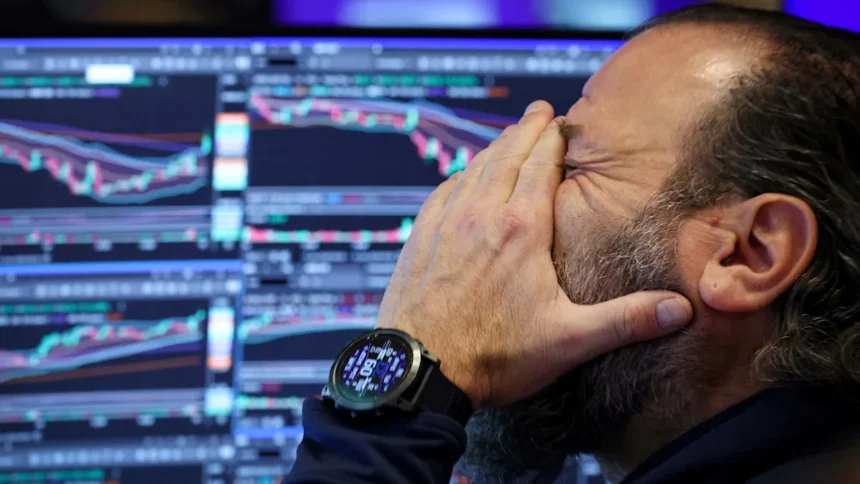
In a noteworthy downturn in the stock market, major indices experienced significant losses, with the Dow Jones Industrial Average closing down 870 points, or 1.75%. The closing numbers reflected a trend of decline, as many stocks faced pressure during the trading session, especially towards the end of the day. The Nasdaq Composite dropped 2.4%, with many of its large-cap constituents struggling to hold onto gains. The S&P 500 saw a slightly steeper decline, reflecting an overall bearish sentiment. Even the previously strong Russell 2000, which represents small- and mid-cap stocks, fell by 1.2%, signaling a shift in market dynamics.
The day’s performance highlighted a clear risk-off environment, with only the consumer staples sector showing resilience, managing to end the day in positive territory. The defensive nature of this sector has raised alarms previously, given its significant surge over the last five days—the largest such increase since 2020. Analysts suggested this movement could signal caution among investors.
One contributing factor to this market behavior was the notable jump in the VIX, often referred to as the “fear index,” which rose approximately four to five points. Historical data indicates that following such an uptick in the VIX—particularly after a period of calm—the S&P 500 sees marginal gains in the short term but tends to recover more robustly over longer time horizons. While one-week returns are modest, with a win rate of only 58%, the three-month return can average about 5%, supporting a generally bullish long-term outlook. However, analysts emphasized that outliers in past economic events, particularly prior to the global financial crisis in 2007 and the market downturn in 2021, warrant caution.
Attention also turned toward bond markets, where U.S. Treasuries reflected rising yields, a trend that started in overseas markets. Analysts noted that sell-offs from foreign funds, particularly in Denmark, contributed to this shift. In Japan, significant movement in the 30-year bond yield, which surged by 26 basis points, echoed similar trends not seen in the U.S. since 2020. Closer to home, the 30-year Treasury yield rose by eight basis points to 4.92%. Observers are particularly concerned that sustained yields above 5% could have profound implications for Federal Reserve monetary policy.
In parallel, the cryptocurrency market also bore the brunt of this risk-off sentiment. Bitcoin, often viewed as a risk asset, fell below the $90,000 mark. This continues a broader trend of decline, with analysts indicating that Bitcoin’s behavior is not aligning with traditional safe-haven assets. The cryptocurrency has faced challenges maintaining its short-term uptrend, which, as of now, appears to be on the verge of breaking down.
Overall, today’s market dynamics underscore a cautious environment as investors navigate the implications of rising interest rates and shifting sector performances.