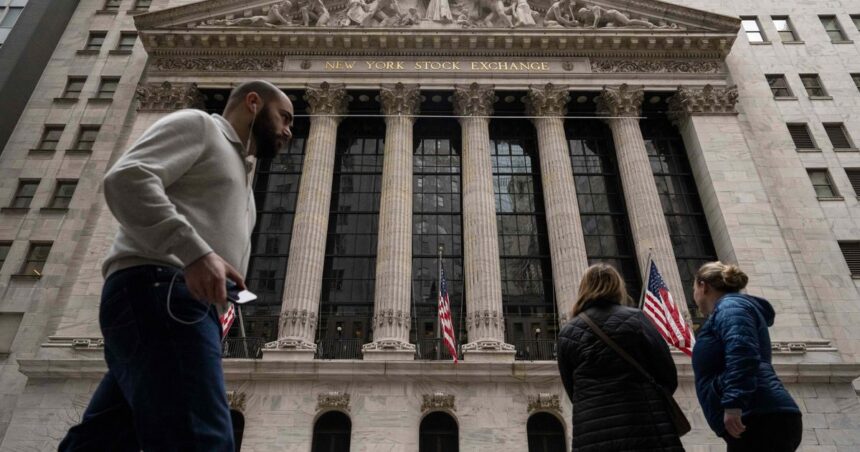
Volatility in the stock market has reached historic levels recently, prompting many investors to take action to safeguard their retirement savings. However, historical trends suggest that remaining calm is typically the best strategy during turbulent times.
The U.S. stock market has consistently rebounded from significant declines, whether triggered by financial crises, trade disputes, or military conflicts. The S&P 500 has shown resilience, recovering from steep losses over time. Yet, the journey to recovery can span several years, and moving investments out of stocks could leave individuals missing out on potential gains when the market rebounds.
Current uncertainty looms as a result of geopolitical tensions, particularly the ongoing conflict in Iran, which has led to notable disruptions in the global oil supply. This situation has caused oil prices to soar, with reports indicating prices peaking at $119 per barrel, substantially higher than pre-war figures around $70. Analysts foresee that if the conflict persists, oil prices could reach as high as $200 per barrel, surpassing the previous record of $147 from 2008. The implications of sustained high oil prices extend beyond just fuel costs, potentially increasing operational expenses for businesses reliant on transportation and affecting electricity prices.
The S&P 500 is currently tracking towards its fifth consecutive week of losses, marking its most protracted decline in nearly four years. It has retraced to levels not seen since last August, sitting nearly 8% below its peak achieved earlier this year. The tech-heavy Nasdaq composite has already experienced a drop exceeding 10% from its all-time high, prompting industry insiders to label it a “correction.”
Market fluctuations have been particularly pronounced recently, reflecting a rollercoaster of investor sentiment regarding the conflict’s resolution. This kind of volatility isn’t unprecedented; the S&P 500 typically sees declines of at least 10% every year or two. Experts suggest that corrections serve a purpose, allowing the market a health check by preventing unbounded optimism.
Regarding investment strategies, selling stocks or reallocating 401(k) funds to bonds might mitigate exposure to volatility, but it also risks timing issues when trying to re-enter the market. Historically, some of the best market days occur around downturns, reinforcing the challenge of market timing.
For novice investors, the rise of mobile trading apps has made stock trading easily accessible, encouraging a fresh wave of investors, many of whom may be unaccustomed to such volatility. Fortunately, younger investors hold a critical advantage—time. As they approach retirement, those years allow for recovery periods that can lead to significant portfolio growth.
Conversely, older investors face a more challenging scenario. With less time to recover from market downturns, they may need to consider reducing expenditures following market dips to preserve their investments. For those facing immediate financial needs, accessing funds from a 401(k) can lead to tax liabilities and penalties, creating additional hurdles for recovery.
In the realm of pensions, those with defined-benefit plans are less affected by stock market fluctuations, receiving guaranteed payments regardless of market performance.
However, current conditions differ from historical trends. Typically, falling stock prices drive investors toward safer investments like Treasury bonds and gold. Yet, in this instance, rising oil prices and inflation have negatively impacted Treasury prices, causing yields to climb above 4.40%, much higher than pre-conflict levels. Gold has similarly struggled, as rising bond yields diminish its appeal compared to interest-bearing investments.
The future of the stock market remains uncertain, leaving experts unable to provide definitive timelines or predictions regarding the resolution of current challenges. The best course of action for investors may be to exercise prudence, diversifying portfolios to manage risks while keeping long-term financial goals in sight.