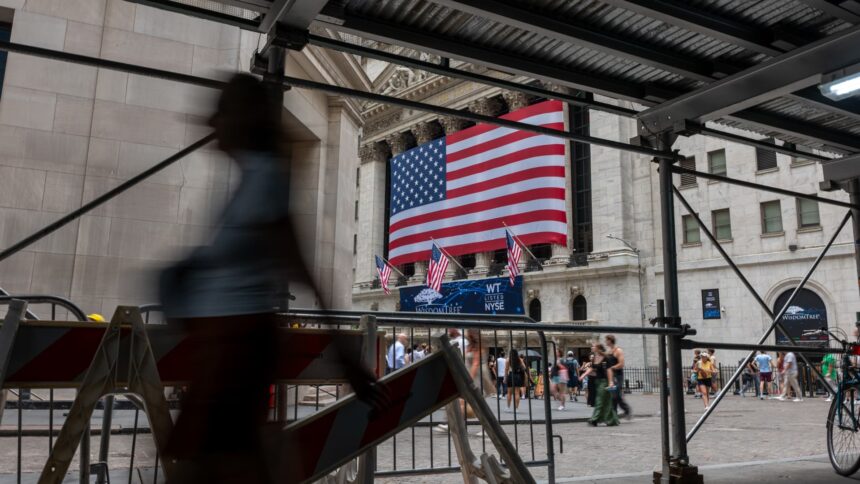
On February 20, market developments captured attention across various sectors, highlighting significant trends and cautionary indicators.
First, Blue Owl Capital’s recent loan sales have stoked discussions about potential vulnerabilities in private credit markets, with experts likening the situation to a “canary in the coal mine.” While many loans are perceived to be mispriced, the broader implications do not appear catastrophic at this time.
In economic news, stock futures dipped following the release of the fourth-quarter U.S. GDP, which grew by just 1.4%, significantly lower than expectations. Analysts attribute part of this slowdown to the government shutdown. Additionally, the Personal Consumption Expenditures (PCE) index, an inflation measure favored by the Federal Reserve, showed a 0.4% increase in December, slightly surpassing consensus forecasts.
Texas Roadhouse experienced a more than 3% rise in its share price as the steakhouse chain reported a lackluster fourth quarter but noted an exceptionally strong start to Q1. However, the ongoing cattle bull market suggests that beef inflation pressures may continue.
Barclays reacted to the software sector’s downturn by lowering its price target for CrowdStrike from $610 to $550, though it maintained a buy rating. This decline highlights the broader challenges facing the software industry, which has presented buying opportunities for some investors.
In aerospace, Morgan Stanley initiated coverage of GE Aerospace with a buy rating and set a price target of $425, indicating a potential upside of about 27%. Analysts praised the company’s robust cash flow amidst a booming air travel market, which they see as a significant investment opportunity, particularly contrasted against Boeing.
On the pharmaceutical front, Barclays initiated a sell rating on Pfizer, predicting limited stock movement until the company provides more insights into its obesity drug pipeline. In contrast, the firm endorsed Bristol Myers and Eli Lilly, mentioning promising developments in their respective pipelines, while maintaining a positive view on Merck.
Citi boosted its price target for Costco from $990 to $1,000, though this increase comes under peculiar circumstances, as the company awaits a critical Supreme Court ruling regarding tariffs that could impact its operations following a lawsuit against the previous administration.
Elsewhere, Barclays revised Molson Coors’ price target downward from $49 to $47, reiterating a sell rating after the company provided disappointing guidance for 2026. Industry trends suggest a decline in alcohol consumption, compounded by challenges such as aluminum tariffs affecting beer producers.
Conversely, Live Nation shares surged 3.5% after exceeding quarterly revenue projections, buoyed by strong demand for concerts and live events. Future ticket sales for 2026 reflect a positive trend, with early sales jumping significantly and a high volume of large-venue shows already booked, indicating continued consumer willingness to spend on entertainment.
Lastly, Klarna faced a significant setback with the announcement of a worse-than-expected net loss and an underwhelming outlook for fiscal 2026. This prompted JPMorgan to cut its price target for the “buy now, pay later” provider dramatically, while UBS also reduced its target, highlighting a challenging environment within the BNPL sector. Affirm emerged as the preferred competitor in this space, suggesting a realignment in investor sentiment.
As investors navigate these developments, market watchers remain attentive to potential implications and shifts across various sectors.