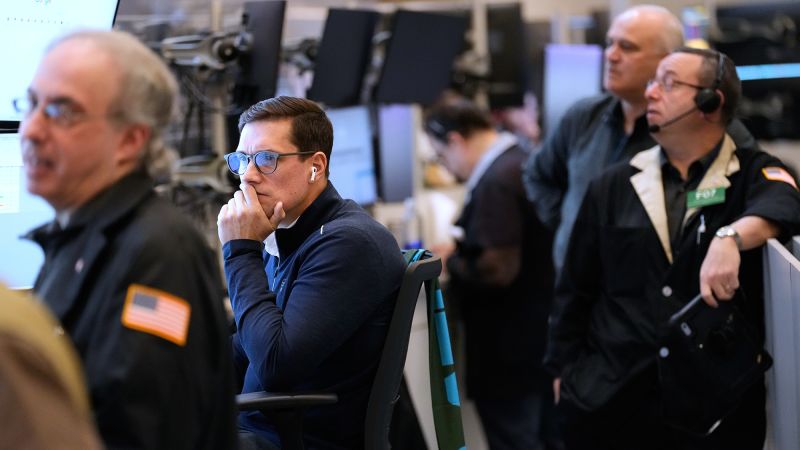
The recent escalation of conflict between the U.S. and Iran reverberated through global markets, triggering notable shifts in investment behavior. On Monday, oil prices surged, and investors flocked to gold, perceiving these commodities as safe havens amid rising geopolitical tensions. Surprisingly, stock markets largely remained unperturbed during this initial wave of concern.
Just a week earlier, the stock market faced a significant downturn, with the Dow Jones Industrial Average plummeting by 800 points after a fictional outlook on AI’s economic impact stirred fears among investors. Fast forward to the stock market environment of 2026: geopolitical skirmishes seem to barely affect investor sentiment, while speculative fears about AI significantly influence trading behavior.
However, by Tuesday, this indifference appeared to wane, as market participants began to reassess the potential economic ramifications of the conflict. Stock futures indicated a stark decline, with futures related to the Dow dropping 850 points, or approximately 1.8%. The repercussions spread to global markets, with South Korea’s Kospi index plummeting by 7.2%. Major indices in Japan and Hong Kong closed lower, reflecting widespread apprehension. In Europe, the losses were pronounced as well, with the FTSE 100 down by 2.6%, Germany’s Dax sliding by 3.4%, and France’s CAC index falling by 2.9%.
Despite the geopolitical turmoil, stock market investors generally prioritize corporate earnings and future growth projections. While conflicts can create uncertainty, analysts noted that, thus far, market fundamentals remain largely untouched. “Historically, when conflicts arise globally, they do not typically translate into significant declines in U.S. corporate profits, which are crucial for the equity market,” stated David Stubbs, chief investment strategist at AlphaCore Wealth Advisory.
Historically, global conflicts and wars have not led to prolonged market disruptions. The main concern for the economy, according to analysts, would be any severe impact on oil supply. However, many experts are cautious about forecasting a long-term effect at this stage. “Geopolitical events can introduce short-term volatility, but they usually do not substantively alter the growth trajectory of the markets over the longer term,” commented Jason Pride, chief of investment strategy and research at Glenmede.
On Monday, although stocks initially opened lower, investor sentiment shifted as many seized the opportunity to buy the dip. Despite daunting headlines about military engagements, markets have a history of rebounding regardless of external pressures. “Past events that seemed catastrophic at the time often turned out to be less harmful to long-term market health,” Pride noted.
Certain sectors, such as airlines and cruise lines, experienced noticeable declines, but the broader market exhibited resilience. Many investors had anticipated military action from the Trump administration against Iran, which may have contributed to the limited shock in the market.
Analysts at Carson Group analyzed 40 significant geopolitical and historical events over the past 85 years and discovered that, on average, the S&P 500 initially dipped by 0.9% in the month following such events but typically rose by 3.4% over the subsequent six months. “Geopolitical crises that look concerning in the short term often resolve positively from a market perspective in the long run,” said Ryan Detrick, chief market strategist at Carson Group.
Over the past year, investors have been rewarded for purchasing dips in the stock market, which may have bolstered confidence and contributed to the swift recovery seen on Monday.
The S&P 500, predominantly composed of large tech firms, has benefitted from excitement surrounding AI advancements, strong earnings reports, and decreases in interest rates, all of which have fueled market rallies. Nevertheless, if the conflict with Iran escalates, leading to disruptions in global oil supply, the impact on stocks could eventually be significant. Stubbs contended that while a one-month disruption would be manageable, prolonged conflict could draw investor attention.
Despite this, the narrative surrounding AI and its impact on various sectors is expected to take precedence. “The dialogue about which companies will thrive or falter due to AI is likely to dominate discussions in the market, even more so than the developments in Iran,” Stubbs added, indicating that the ongoing geopolitical situation may not eclipse these critical market dynamics.