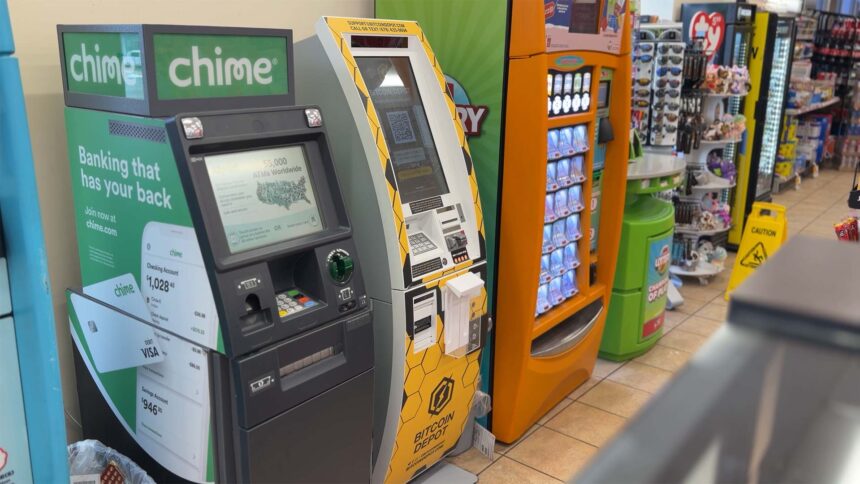
The Massachusetts Attorney General has taken legal action against Bitcoin Depot, a prominent operator of cryptocurrency ATMs, citing serious allegations that the company has permitted criminals to exploit its machines, resulting in substantial financial losses for Massachusetts residents. Attorney General Andrea Joy Campbell conveyed in a press release that the lawsuit accuses Bitcoin Depot of employing misleading sales tactics to overcharge customers, while knowingly facilitating scams that have swindled state residents of over $10 million.
Filed on February 3, the lawsuit is part of a broader trend of increased scrutiny towards cryptocurrency ATM operators, as concerns grow over sophisticated scams targeting vulnerable individuals, especially the elderly. The recent surge in crypto ATM-related fraud has alarmed law enforcement agencies nationwide, prompting investigations and regulatory measures.
The nature of crypto ATMs, which allow cash transactions for cryptocurrencies like Bitcoin in automated settings, is marketed as a convenient purchasing solution. However, law enforcement statistics reveal a dramatic rise in fraud cases involving these machines. In 2024 alone, the FBI reported nearly 11,000 fraud complaints linked to crypto ATMs, marking a staggering 99% increase from the previous year and resulting in estimated losses of approximately $247 million. The trend shows no signs of abating, with between January and November 2025, losses climbing to around $333 million.
This rise in fraud has led to increased regulatory efforts at both state and local levels, prompting some jurisdictions to either impose stricter regulations on the operation of crypto ATMs or ban them altogether. Previously, attorneys general from Iowa and Washington, D.C. initiated lawsuits against similar operations in response to consumer protection concerns.
The Massachusetts lawsuit claims that over half of all transactions conducted through Bitcoin Depot kiosks in the state from August 2023 to January 2025 were linked to fraud. In response to these allegations, Bitcoin Depot asserted its disagreement with the claims, emphasizing its commitment to compliance and consumer protection. The company stated that it collaborates with law enforcement to mitigate criminal activity linked to its machines and has implemented measures such as requiring customer identity verification for each transaction.
The accusations against Bitcoin Depot align with a previous lawsuit from Iowa’s attorney general, which found that a significant portion of the company’s transactions also appeared fraudulent. A recent investigation highlighted a partnership between Bitcoin Depot and Circle K convenience stores, revealing that kiosks placed in their locations facilitated at least $1.5 million in scam transactions, with Circle K benefiting financially from the arrangement.
The Massachusetts complaint further alleges that Bitcoin Depot had prior knowledge of the fraudulent activities linked to its machines. In 2021, a due diligence team within the company flagged that 90% of their interactions with customers were with individuals who were likely scam victims. Prosecutors allege that Bitcoin Depot not only recognized these issues but also made certain compliance measures less stringent, which inadvertently facilitated increased fraudulent activities.
Internal metrics indicated that between 13% and 16% of the funds transacted through Bitcoin Depot machines from March to September 2023 were associated with scams. The complaint noted that Bitcoin Depot approved suspicious transactions, including those involving users attempting to operate multiple kiosks in a single day, and flagged transactions where individuals used fictitious names.
As investigations into Bitcoin Depot’s business practices continue, at least one other state attorney general, Catherine Hanaway of Missouri, has begun examining the company’s operations, demanding evidence concerning potential violations of consumer protection laws. In a statement, Hanaway indicated that her office is looking into troubling allegations related to undisclosed fees and deceptive practices involving Bitcoin ATMs.