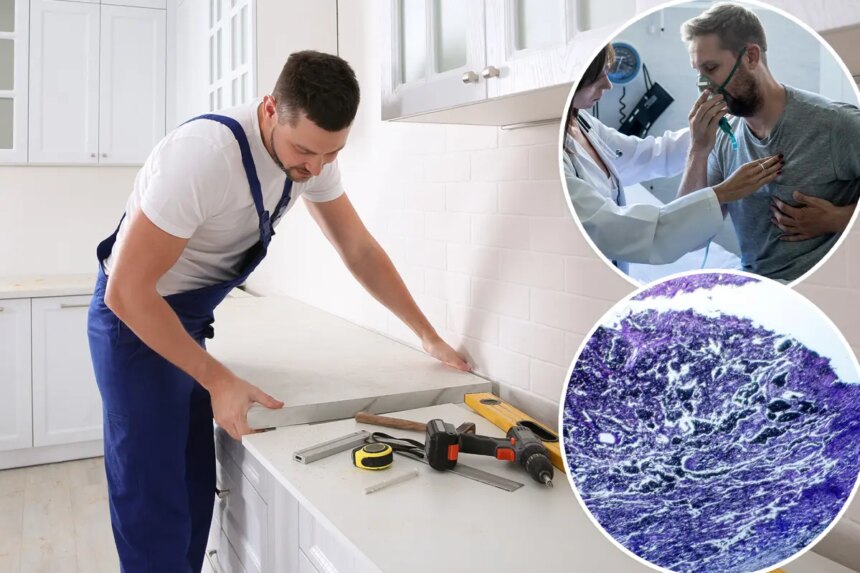
The demand for luxe quartz countertops has skyrocketed in recent years, leading to an impressive 800% increase in imports to the United States. This remarkable rise is attributed to the countertops’ durability, heat resistance, and appealing natural appearance. However, beneath their aesthetic allure lies a troubling issue affecting the health and safety of workers involved in their installation.
On Tuesday, the Massachusetts Department of Public Health issued a safety alert regarding silicosis, an incurable lung disease linked to inhaling crystalline silica dust. This announcement follows the state’s confirmation of its first silicosis case within an employee of the stone countertop fabrication industry.
Although silicosis has traditionally been associated with mining and construction, it has become increasingly prevalent among workers fabricating engineered stone, which contains much higher levels of silica compared to natural stones like granite and marble. According to the American Lung Association, approximately 2.3 million workers across the U.S. are at risk of silica exposure in their workplaces.
Silicosis results from inhaling dust produced during the cutting, polishing, or grinding of stones, especially those rich in engineered quartz. Symptoms can manifest as an irritating cough, shortness of breath, fatigue, and even chest pain or swelling in the legs. While there are treatments available to manage the symptoms, no cure exists, and the disease can deteriorate over time, leading to severe consequences like lung cancer, tuberculosis, or fatality.
The confirmed case in Massachusetts involved a Hispanic man in his 40s, who had spent 14 years working in stone countertop fabrication and installation. It was reported that the first known case of silicosis linked to engineered stone surfaced in Texas in 2015. Recently, a 2023 study conducted in California found 52 workers in the quartz countertop industry diagnosed with silicosis, with 20 suffering from advanced stages of the disease and 10 succumbing to it before the study concluded.
Despite the dangers associated with silicosis, quartz countertops remain popular in kitchen design, and public health officials have not issued a blanket ban on their use. Instead, there is a call for stricter regulations and enhanced safety measures. Emily H. Sparer-Fine, director of the Massachusetts Department of Public Health’s Occupational Health Surveillance Program, highlighted the recent case as a grave reminder of silicosis’s immediate threat to workers’ health. She urged all participants in the supply chain to consider materials with lower silica content to mitigate health risks.
Proposed solutions to combat this issue include the implementation of better ventilation systems and a consistent medical surveillance program for workers to monitor their health. Dr. Sheiphali Gandhi, a pulmonologist from UC San Francisco and co-author of the aforementioned California study, warned of the urgent need to address this problem. If left unchecked, she indicated, the number of cases could escalate dramatically over the coming years, given the delayed onset of the disease.
In 2016, the federal Occupational Safety and Health Administration (OSHA) introduced two standards aimed at protecting workers from respirable crystalline silica, mandating that exposure levels remain below 50 micrograms per cubic meter of air over an eight-hour workday. However, a retrospective report from California safety officials found that around 72% of the fabrication shops in the state were likely out of compliance with existing silica standards, exposing many workers to significant risks.
In response, California’s Division of OSHA initiated emergency regulations for respirable crystalline silica in 2023, which were subsequently made permanent in late 2024. These regulatory actions reflect a growing acknowledgement of the dangers posed by silica exposure and the urgent need to safeguard the health of workers in the stone fabrication industry.