









Mastercard has recently made significant strides in enhancing its presence in the realms of cryptocurrency and agentic commerce, which are key components of its broader diversification strategy. The company has successfully completed a test of an authenticated agentic payment system in Malaysia, demonstrating its commitment to advancing artificial intelligence capabilities that facilitate transactions with minimal human involvement.
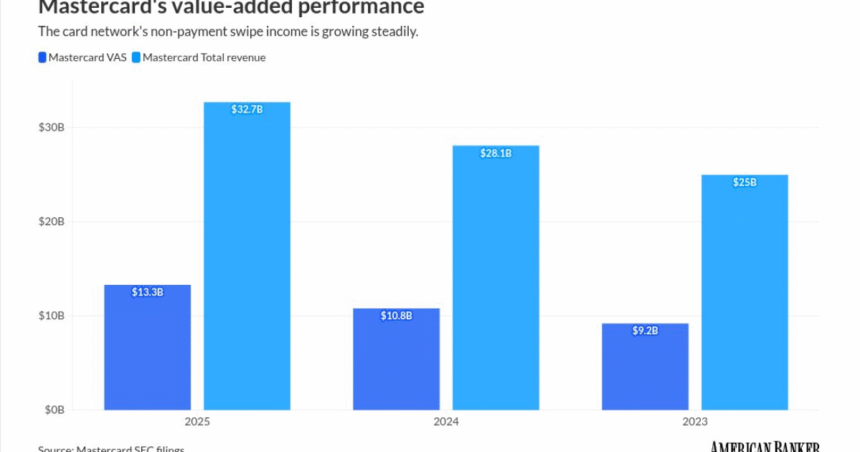
In conjunction with this technology initiative, Mastercard has launched the Mastercard Crypto Partner Program, a comprehensive global initiative that encompasses more than 85 cryptocurrency companies, payment firms, and financial institutions. This program aims to foster networking and collaboration in the development of digital asset technologies. Both these advancements represent Mastercard’s endeavor to generate revenue from sources beyond traditional card payments, reflecting a notable increase in value-added services. The company’s revenue from these services is projected to rise from $9.2 billion in 2023 to $13.3 billion by 2025.
Mastercard’s strategic focus is squarely on incorporating value-added services into innovative payment flows, which highlights digital advancements such as cryptocurrency and agentic commerce. Analysts from William Blair noted that the objective is to provide a more seamless payment experience through technological enhancements.
A significant aspect of this strategy is agentic commerce, which leverages artificial intelligence to automate several functions, including shopping and payments. Recently, Mastercard collaborated with Malaysian financial institutions such as CIMB Group Holdings and Malayan Banking on a transaction utilizing Mastercard Agent Pay. An AI agent was able to book a transportation service from Kuala Lumpur International Airport to the city’s primary transport hub, KL Sentral.
“This transaction exemplifies how AI can engage in commerce in a responsible manner. Through Agent Pay, we are instilling trust, authentication, and transparency directly into AI-driven payments,” stated Beena Pothen, Mastercard’s country manager for Malaysia.
Beyond Malaysia, Mastercard is also piloting various forms of agentic commerce in Australia, New Zealand, and India. According to William Blair analysts, the essence of agentic commerce lies in its ability to enhance the shopping experience for both merchants and consumers by harnessing the power of AI.
Alongside these advancements, Mastercard continues to bolster its cryptocurrency strategy. While neither Mastercard nor its competitor Visa issue their own cryptocurrencies or stablecoins, both companies are actively working to facilitate transactions involving cryptocurrency within their merchant networks. The recently established crypto partner program will include influential firms such as Binance, BitGo, Circle, and Crypto.com, among others. These partnerships will help direct the future development of products and services, ensuring that digital assets can effectively integrate with existing payment systems and enhance global commerce operations. By collaborating with these companies, Mastercard aims to make cryptocurrency more accessible to those outside the cryptocurrency sphere, enabling the sale of innovative products to issuers and merchants within its network.