The local health department recently deployed mobile health clinics across the community to offer MMR (measles, mumps, and rubella) vaccinations, but the turnout has been disappointingly low. According to health official Bell, only a small number of doses were administered during each clinic’s operation. With no further vaccination clinics scheduled, the department’s website indicates a limited window for residents to receive the vital vaccination.
The urgency for vaccinations is underscored by the ongoing measles outbreak affecting South Carolina, particularly in Spartanburg County. Currently, 254 individuals are under a three-week quarantine due to exposure to the virus, which, infamously known as the most contagious virus globally, can linger in the air for hours after an infected person has left the vicinity.
The situation is exacerbated in schools, where students who are unvaccinated are facing a second quarantine period since the academic year commenced. While Bell did not specify how many students are in this extended quarantine, she noted that it does not represent a significant proportion of the student body. The lengthy quarantines, which span weekends and holidays, limit students’ access to education for an extended period of up to 42 days.
The measles outbreak is not limited to South Carolina. In a recent report, the Centers for Disease Control and Prevention (CDC) revealed that there have been a total of 1,912 measles cases recorded in the United States as of the current year, with the majority of cases occurring among unvaccinated children and teenagers. In the Western U.S., ongoing outbreaks are reported, including 176 cases in Arizona and 115 in Utah. Kansas health officials reported another outbreak linked to a daycare facility, where an infected individual was present daily for an entire week.
Additionally, officials in Montezuma County, Colorado, near the borders of Utah and Arizona, confirmed an unvaccinated child was diagnosed with measles although there was no known connection to other cases or travel outside the state. This anomaly raises concerns among health officials who speculate that unidentified cases could be circulating within the community.
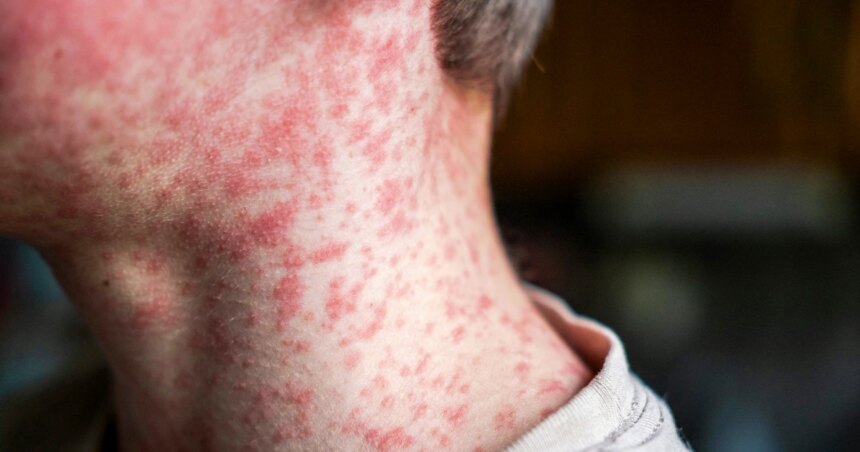
Measles symptoms can manifest as follows: high fever—sometimes surpassing 104 degrees, a severe cough, runny nose, red and watery eyes, tiny white spots in the mouth, and a characteristic rash that progresses from the scalp downward across the body. Approximately 11% to 12% of measles cases may necessitate hospitalization, and three fatalities have been recorded in the U.S. this year, including two young girls.
Vaccination remains the most effective preventative measure, with MMR vaccines administered in two doses during early childhood offering a robust 97% protection rate against the virus.