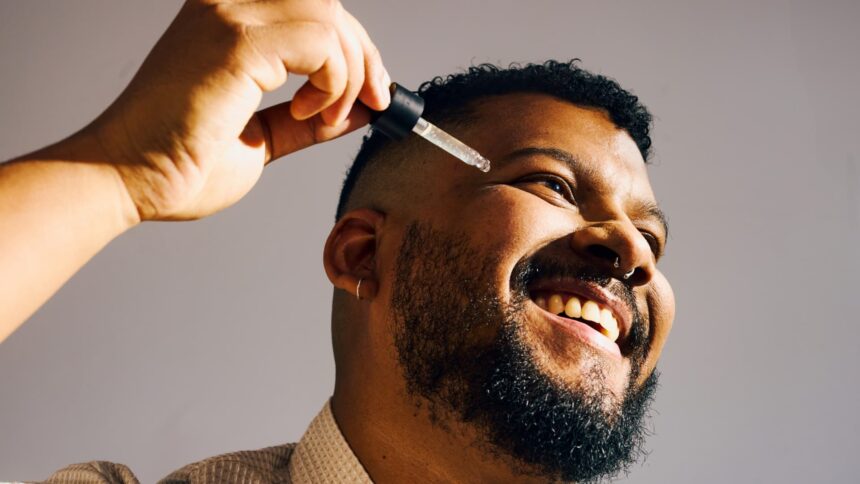
In recent years, makeup has shifted from a traditionally female-dominated sphere to a burgeoning market for men. As routines expand to include cosmetics, contemporary men, like 24-year-old Daniel Rankin from New York, are finding empowerment in products that enhance their appearances. Rankin recalls his initial hesitation when he started using concealer and tinted moisturizers but now considers these steps normal.
Industry experts indicate that men’s makeup is becoming one of the most promising growth sectors within the beauty industry. The men’s grooming market reached over $7.1 billion in the U.S. by 2025, with projections estimating global revenues will surpass $85 billion by 2032. The driving force behind this growth is primarily stemming from younger generations, particularly Gen Z. An increase in the usage of facial skin-care products was observed: 68% of U.S. Gen Z men aged 18 to 27 reported using them in 2024, a stark rise from 42% two years earlier.
Linda Dang, CEO of the Canadian beauty retailer Sukoshi, noted that men are increasingly establishing structured beauty routines rather than casually trying random products, making this demographic market more valuable. Unlike occasional purchases, cosmetic products encourage consistent usage and experimentation. Once men find makeup that suits their needs, they tend to restock rather than abandon the practice.
As acceptance grows, a recent survey revealed that 15% of U.S. heterosexual men aged 18-65 used cosmetics in 2022, with an additional 17% open to the idea. The percentage of men who claim to never use makeup has decreased significantly — from over 90% in 2019 to about 75% in 2024.
Retailers are adapting to this evolving market landscape. Traditional beauty giants like Ulta Beauty and Sephora are increasingly incorporating men’s products into gender-neutral displays, moving away from the dedicated “Men’s” aisles that can feel stigmatizing. Major retailers such as Target and Walmart are also expanding their men’s cosmetics lines; Target’s recent collaboration with AMP, an online streaming collective, led to the creation of TONE, a new line tailored for men.
In the digital realm, beauty brands are investing heavily in influencer partnerships, especially on platforms like TikTok and Amazon, to facilitate product discovery and ease of purchase. Some brands, like War Paint, have even included QR codes on their packaging to provide users with video tutorials, alleviating any uncertainty regarding product use.
Despite this upward trend, social stigma remains a challenge, alongside current economic pressures that could hinder expenditures on non-essential items. Experts warn that while market growth is promising, consumer education is crucial as many men navigate unfamiliar territory in skincare and cosmetics.
Historically, men have adorned themselves with makeup since ancient civilizations, but the current movement can be traced back to the mid-2010s. A key moment was CoverGirl’s appointment of YouTuber James Charles as its first male ambassador in 2016, marking a significant shift in how male representation in cosmetics was perceived. Today’s cultural landscape reflects a broader acceptance of diverse expressions of masculinity, which companies are racing to capitalize on.
Social media has played an instrumental role in accelerating this change. Platforms like TikTok have democratized beauty education, allowing men easy access to tutorials and product recommendations without needing to lean on traditional sources for information. This shift has also seen a loosening of rigid gender categories, particularly among Gen Z consumers who prefer gender-neutral branding.
As the market for men’s beauty matures, brands face a compelling decision: should they create products tailored explicitly for men, or cater to a more generalized audience? Some brands argue for male-specific formulations, while others, including those like Fenty Beauty, promote inclusivity and accessibility. Industry experts predict that over the next decade, the distinction between “men’s makeup” and regular makeup may dissolve entirely, signaling an evolving cultural narrative around beauty that prioritizes personal expression over traditional gender norms.