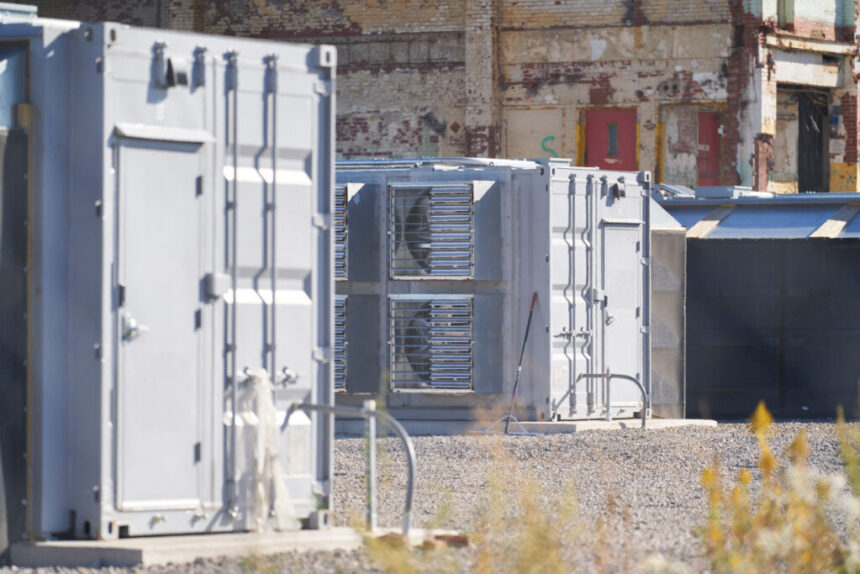
In a significant development in Michigan’s Upper Peninsula, a picturesque log cabin school known as Lake Superior Academy is embroiled in a legal struggle due to a bitcoin mining operation that has disrupted its environment and educational mission. The academy, which focuses on K-5 environmental education, has reported that the operation, which commenced in March, has forced children indoors and driven away local wildlife critical to their studies.
Director Susie Schlehuber expressed her dismay, highlighting how the noise from the mining site has fundamentally altered the school’s learning environment. “Prior to the bitcoin mine moving in, it was just a beautiful spot for learning,” she noted. In response to the ongoing disruptions, the school filed a lawsuit against Odessa Partners, the Florida-based owner of the mine, and was granted a temporary restraining order halting the operation pending further litigation.
The mine, which requires massive amounts of electricity and water for cooling, has raised concerns among community members regarding its environmental impact and resource use. Residents have mobilized to demand more stringent regulations, as it appears many local municipalities are ill-prepared to deal with the complexities associated with bitcoin mining.
Kalvin Carter, project director of Up North Advocacy, indicated that this situation has revealed a lack of regulatory frameworks around such operations in the region. He described the current state of governance as a “wild west,” where community leaders may not fully understand the implications of bitcoin mining. “A lot of these communities and boards don’t know what a bitcoin is, and it’s hard to regulate something when you don’t know what it is,” Carter said.
The Odessa mine is one of three bitcoin operations in the Upper Peninsula, a region that appeals to such enterprises due to its cool climate and abundant water resources. Local frustration has also been fueled by Cloverland Electric Cooperative’s efforts to attract these energy-guzzling operations, which they argue will contribute to revenue generation amid a declining population. However, many residents are skeptical about the direct benefits to them, fearing the potential for increased utility rates and environmental degradation.
This community outcry has led some municipalities to take proactive measures, with one nearby township implementing a moratorium on new mining operations as they work to establish clearer regulatory guidelines. “It wasn’t just tree-hugging leftists or MAGA folks—it was all stripes of people,” Carter explained, noting the diverse community support against the bitcoin operation.
Local concerns extend beyond the noise; residents worry about the potential exploitation of natural resources and the long-term viability of their community. The cooling systems employed by mines add a layer of complexity as both water usage and possible contamination of local groundwater remain unanswered questions.
As the debate unfolds, Lake Superior Academy’s legal action against Odessa has temporarily alleviated some noise issues, with the company taking measures to install sound barriers even before the court’s ruling. Yet, potential expansions at the academy meant to accommodate more students are currently on hold as the conflict continues.
Community members like Chloe Kannan are increasingly aware of the broader implications of hosting such facilities. She noted, “People are starting to see what this is doing to Wisconsin and other communities across the country, and we know we’re on the largest body of freshwater in the world, and we know we’re a target.”
As discussions continue and the legal battle evolves, residents of Dafter Township and surrounding areas remain vigilant. Their fight against the bitcoin mining facility reflects a growing concern for balanced environmental stewardship and community welfare in the face of accelerating industrial demands.