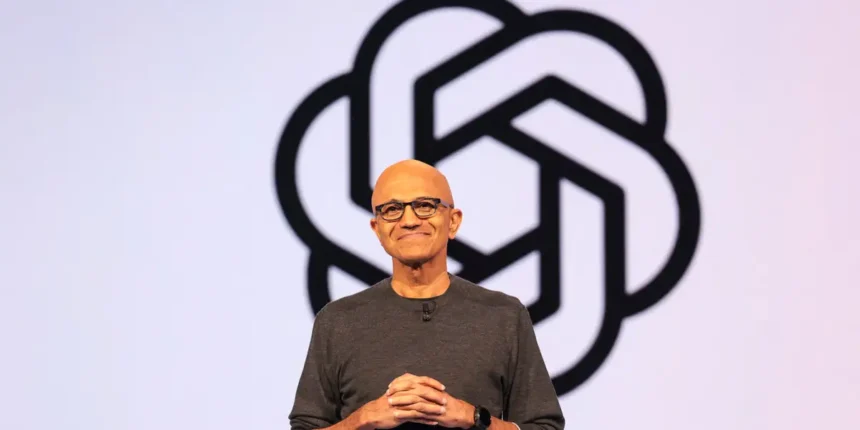
Microsoft’s early investments in OpenAI have proven to be transformative, both for the tech giant and the AI landscape as a whole. In a recent interview, CEO Satya Nadella recounted the hesitation and risk perceived surrounding the company’s initial $1 billion investment in OpenAI in 2019, just a few years after the startup’s founding.
Reflecting on that pivotal moment, Nadella revealed that even within Microsoft, securing board approval for such a substantial investment was no small feat. “You kind of got to have to get a board approval to just go throw a billion dollars out there,” he said. Despite the inherent risks, Nadella noted that it was relatively easy to convince stakeholders of the importance of investing in an area as groundbreaking as AI.
Nadella further recalled that Bill Gates, Microsoft’s co-founder, shared similar concerns at the time. “Remember this was a nonprofit, and I think Bill even said, ‘Yeah, you’re going to burn this billion dollars,'” Nadella elaborated. Despite these reservations, both Gates and Nadella exhibited a willingness to embrace the risks, a decision that has since paid off significantly.
Since that initial investment, Microsoft has committed more than $13 billion to OpenAI, a testament to their confidence in the company’s potential. OpenAI’s trajectory has been remarkable, especially after the release of ChatGPT in late 2022, which rapidly gained traction and amassed a million users within just five days of its debut.
At OpenAI’s recent annual DevDay conference, CEO Sam Altman reported that the platform now serves over 800 million users weekly, underscoring its meteoric rise in popularity. This success has led to significant structural changes within OpenAI; the company has restructured its nonprofit arm, establishing a new public benefit corporation called OpenAI Group PBC. As a result of these developments, Microsoft holds a 27% stake in OpenAI’s for-profit business, valued around $135 billion.
The financial markets have responded positively to Microsoft’s investment in AI, with its shares climbing nearly 29% year-to-date, illustrating the strong confidence in the future of both the company and the broader AI industry.