The energy landscape in the Gulf region has experienced significant upheaval due to escalating tensions and military conflicts. This week marked the onset of a series of production halts, beginning with Qatar, which has suspended most of its liquefied natural gas output. Following this, both Iraq and Kuwait commenced shutdowns at their oilfields. There are looming concerns that Saudi Arabia and the United Arab Emirates might also soon halt their production activities.
The primary catalyst behind these disruptions is the effective closure of the Strait of Hormuz, a crucial chokepoint for global oil shipments, stemming from the ongoing war in Iran. The situation has drastically limited the export capabilities of Gulf energy producers, leading to a swift chain reaction. As domestic storage facilities reach capacity, energy producers are forced to shutter production to avoid overstocking, which could have longer-term negative repercussions.
Industry experts have voiced concerns about the long-term damage caused by the abrupt cessation of oil and gas production. Sid Misra, a petroleum engineering professor at Texas A&M University, noted that oil production doesn’t merely stop; it initiates a process of irreversible physical decay in the wells. Once production halts, oil can become trapped underground as water fills the voids left by extraction, rendering it nearly impossible to resume operations at pre-shutdown levels. Misra emphasized the potential consequences on global supply, suggesting that even once peace is restored, the capacity to produce energy may be permanently diminished, driving energy prices higher over the long term.
Despite the challenges, some analysts maintain a cautiously optimistic outlook. Pavel Molchanov, an energy analyst at Raymond James, highlighted that Middle Eastern nations within OPEC have developed the ability to adjust production more nimbly than other regions. He anticipates that production adjustments may take days or weeks rather than months, contingent on the specific field and circumstances at play.
In the United States, officials are addressing a critical issue affecting energy markets: the soaring costs of insurance for oil shipments in the region, which have surged since the outbreak of hostilities. The U.S. government is reportedly preparing to offer subsidized insurance through third parties and is considering naval escorts for oil tankers traversing the Strait of Hormuz. The U.S. International Development Finance Corporation (DFC) is set to provide maritime insurance, focusing on war risk coverage for the Persian Gulf, and is currently collaborating with various U.S. entities to implement this initiative.
The rising oil prices are reflecting this turbulence, with U.S. oil benchmarks exceeding $90 per barrel, a nearly 60% increase since the beginning of the year. This surge is driving up costs across global markets, impacting gasoline, diesel, and jet fuel prices. The U.S. has seen an increase of over 60 cents for a gallon of regular unleaded gasoline compared to January lows, with even greater implications for oil-dependent economies in Asia and Europe.
Tensions escalated further when the Iranian Revolutionary Guard claimed to have complete control over the Strait of Hormuz, coinciding with President Donald Trump’s call for “unconditional surrender” from Iran. The rhetoric suggests a possible military escalation, with U.S. officials reaffirming their commitment to ensuring safe maritime navigation.
Saudi Arabia, the world’s leading oil exporter, has sought alternative routes for shipments, turning to the Red Sea, but such measures provide only limited relief, given that approximately 89% of its energy exports traverse the Strait of Hormuz. Neighboring countries like Iran and Qatar depend entirely on this route for their oil and gas shipments, while Iraq is similarly reliant (97%).
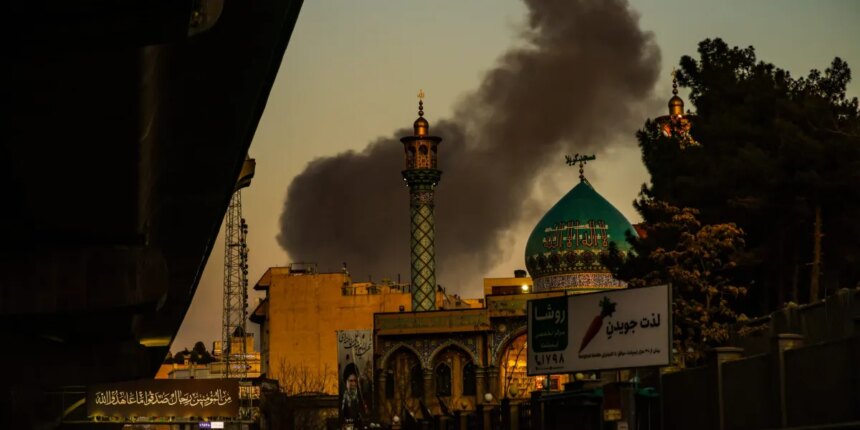
Recent incidents, including attacks on oil tankers and a missile strike on a refinery in Bahrain, have increased fears regarding the safety of energy infrastructure in the region. The worst-case scenario, according to experts, involves Iran deploying mines across the Strait, which would lead to lengthy delays in navigation and recovery efforts.
Amidst these challenges, most major countries possess emergency oil stockpiles as a buffer against supply disruptions. However, there remains a significant risk of natural gas shortages in some Asian and European countries reliant on Qatari gas, particularly given their limited natural gas reserves.
Even if military hostilities eventually abate, analysts suggest that energy prices are likely to retain a “risk premium” due to the lingering disruptions in Gulf infrastructure. The potential for prolonged instability could keep energy prices elevated, indicating that the effects of the current turmoil will reverberate through global markets for the foreseeable future.