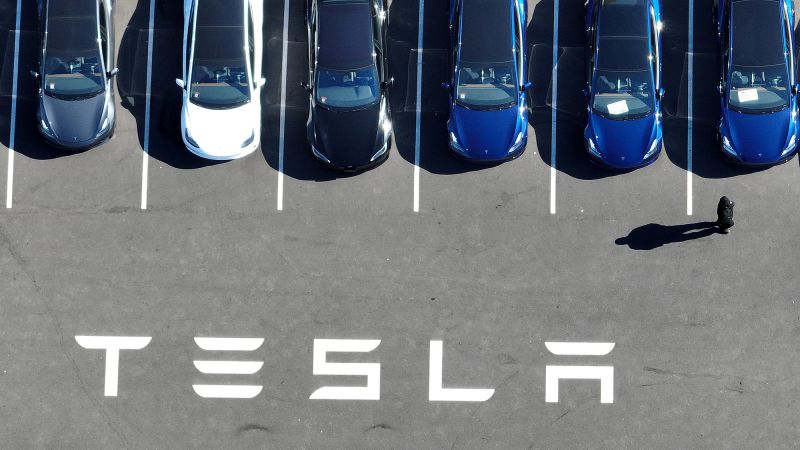
Tesla, once the undisputed leader in the electric vehicle (EV) sector, is facing new challenges as competition intensifies and political factors shift. The company’s EV sales experienced a significant decline, dropping by 9% in 2025, largely due to increased competition from Chinese manufacturers and the cessation of the US EV sales tax credit.
In an unexpected pivot, CEO Elon Musk unveiled a radical strategy aimed at abandoning Tesla’s traditional vehicle production to focus on humanoid robots. During a recent earnings call, Musk announced plans to cease production of the Model S and Model X, reallocating their manufacturing space to create an Optimus robot factory. “We’re gonna take the Model S and X production space in our Fremont factory and convert that into an Optimus factory,” Musk stated, revealing a long-term objective of producing one million Optimus units annually.
Musk envisions a future where these robots would take on a range of tasks, from household chores to medical procedures. He has claimed that Optimus robots could potentially eradicate poverty, make human work optional, and even assist in space exploration. Official sales for the robots are projected to commence by the end of 2027, with Musk imagining that every individual will have a personal robot akin to R2-D2 or C3PO.
Despite Musk’s ambitious vision, criticisms abound. Detractors argue that focusing on humanoid robots diverts attention from Tesla’s core automotive business. Companies like Boston Dynamics and Figure are well-established in the humanoid robotics sphere, raising questions about Tesla’s entry into this competitive market.
Musk’s financial incentives are closely tied to the success of the Optimus project. To unlock nearly $1 trillion in potential compensation tied to company performance, Musk has committed to delivering one million robots within a decade. However, former Tesla engineers highlight the stark differences between the EV and robotics markets, noting that Tesla once thrived with minimal competitors in electric vehicles but now faces a crowded field in robotics.
The initial unveiling of the Optimus project in 2021 showcased a robot performing simple tasks at a promotional event, but progress has been gradual. While Musk claimed that current prototypes can sort objects and assist with factory operations, the robot still falls short of the futuristic promises laid out by Musk.
Global interest in humanoid robotics is surging, with more than 90 companies developing products in the field, and projections suggest potential market values ranging from $370 billion by 2040 to as much as $5 trillion by 2050. Tesla’s advantages lie in its expertise in battery technology and manufacturing efficiencies, which could allow it to compete effectively, providing the company can overcome significant technical hurdles.
Experts caution that the timeline set by Musk may be overly optimistic. Humanoid robots are complex creations, and successful, widespread deployment is anticipated to take at least a decade. Although Musk has encountered skepticism with his ambitious timelines before, including missed deadlines in the electric vehicle sector and SpaceX endeavors, he continues to advocate for Tesla’s innovative capacity.
Additionally, Musk’s controversial political stances and public persona have led to backlash, challenging the brand’s reputation. Critics question whether consumers would be willing to invest in home robots from a polarizing figure, potentially echoing the doubts faced by Tesla’s automotive market.
With both internal and external challenges looming, Musk remains resolute in his vision for the future, vowing that Tesla is equipped to tackle significant technological challenges. However, the journey toward realizing this ambitious future may unfold gradually, navigating the complex landscape of robotics and competition.