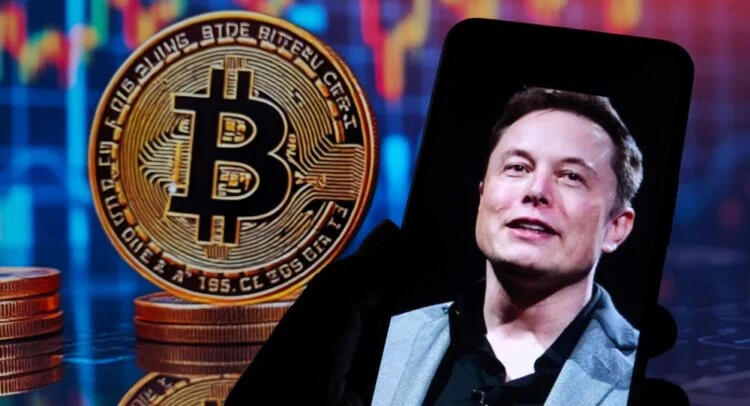
Tesla’s Chief Executive Officer, Elon Musk, recently broke his silence on Bitcoin, linking the cryptocurrency to energy consumption and the burgeoning financial demands of artificial intelligence (AI) development. This comment unfolds as Bitcoin experienced a notable drop, losing around 3% in value during a 24-hour trading period. Furthermore, the entire cryptocurrency market witnessed a significant decline, falling below $4 trillion after a loss of approximately $150 billion.
In a recent post on X (formerly known as Twitter), Musk asserted that “Bitcoin is based on energy,” highlighting a crucial contrast between energy as a finite resource and the unlimited potential for governments to print currency. This assertion emerged in response to a discussion regarding how governmental funding for AI initiatives might be derived from issuing new money—a context in which Musk emphasized Bitcoin’s intrinsic value rooted in energy consumption. This marks Musk’s most explicit endorsement of Bitcoin since Tesla liquidated nearly 75% of its cryptocurrency holdings last year.
Musk’s perspective dovetails with ongoing discussions about the intersection of energy and technology, particularly as the demands of AI systems for electricity become more pronounced. Investors are increasingly examining how energy sources correlate with both computational power and financial assets. Bitcoin advocates, notably MicroStrategy’s Chairman Michael Saylor, have often referred to the digital currency as “digital energy,” reinforcing the notion that Bitcoin’s energy requirements may serve as a robust indicator of its value.
Interestingly, Musk appears to have shifted his view on Bitcoin’s energy consumption. Previously, he suspended Tesla’s acceptance of Bitcoin for vehicle purchases in 2021 due to concerns regarding the environmental impact of cryptocurrency mining. His latest remarks suggest a newfound appreciation for Bitcoin’s energy demands, potentially positioning them as a reflection of its legitimate worth.
Tesla’s involvement in the cryptocurrency sphere remains under scrutiny as the company retains a significant stake, holding approximately 11,509 Bitcoin valued at around $1.29 billion. A recent report indicated that Tesla saw a $284 million gain from these holdings in the second quarter of 2025, which served to mitigate weaker vehicle sales during the same timeframe.
Musk’s public endorsement could rekindle investor interest in Tesla’s cryptocurrency investments. Although immediate market reactions were minimal, his statements historically have a tendency to invigorate Bitcoin enthusiasm. Currently, Musk’s insights interlace two pivotal narratives shaping the financial landscape: the escalating costs associated with AI development and the persistent discourse on Bitcoin’s role within the global energy market.
In terms of investment guidance, analysts have rated Tesla as a Hold, based on assessments from 37 experts over the past three months. The average price target for TSLA shares stands at $365.31, suggesting a potential decline of about 14.89% from current trading levels.