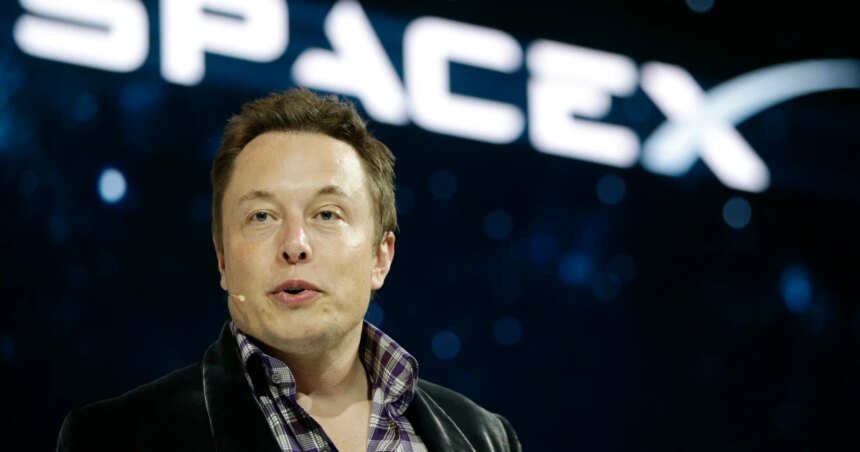
Last week, Elon Musk announced the merger of SpaceX and xAI, a move that has created one of the world’s largest private companies. Analysts observe that this combination offers both significant growth potential and financial risks as the newly formed entity moves closer to going public.
SpaceX, founded in 2002, has emerged as the premier private space exploration company, while xAI, established less than three years ago, has focused primarily on artificial intelligence and social media, notably acquiring the platform X last March. Analysts have noted that the merger presents mutual benefits: SpaceX can leverage xAI’s expertise and financial resources as it prepares for its anticipated initial public offering (IPO), while xAI can enhance its AI infrastructure with the backing of SpaceX’s technological capabilities.
In his announcement, Musk outlined a bold vision for the merged company, which he claims will encompass advancements in AI, space technology, and communication infrastructure, including “AI data centers in space” supported by a “constellation of a million satellites.” Shortly before the merger, SpaceX filed plans with regulators, detailing its satellite initiative, which has drawn interest for its potential to revolutionize data centers by relocating them into orbit.
Nick Del Deo, a senior research analyst at MoffettNathanson, remarked that while the idea of space-based data centers is feasible, realizing it may take years and would face significant hurdles to scale effectively against terrestrial alternatives. Musk, however, has set a more aggressive timeline, projecting that within two to three years, such ventures could represent the lowest-cost option for AI computation—an aspiration historically fraught with missed deadlines.
Andrew Rocco from Zacks Investment Research conveyed a positive outlook on the merger, suggesting that the synergies between the two companies would provide a smoother operational path and enhance their competitive edge in the AI sector. He emphasized that SpaceX’s capabilities could accelerate xAI’s position in the race for AI data centers.
Moreover, as SpaceX approaches its IPO, the strategic timing of this merger aims to bolster its story and appeal to potential investors, especially against competitors like OpenAI and Anthropic. Ali Javaheri of PitchBook noted that the merger may serve as a way for SpaceX to create an appealing narrative that boosts investor enthusiasm and helps achieve the desired valuation.
Reports indicate that the merger could value the combined companies at $1.25 trillion, predominantly driven by SpaceX’s valuation. This marriage of enterprises has triggered speculation about how Musk’s other ventures, including Tesla, might align with this broader strategy. As Tesla announced a $2 billion investment into xAI, discussions have emerged regarding potential collaborations and the possibility of merging all three companies under a unified vision.
Wedbush Securities analysts have suggested that there exists a “growing chance” of Tesla being integrated into the SpaceX/xAI framework, viewing it as Musk’s attempt to consolidate control over a burgeoning AI ecosystem. While some consider such a merger a logical step, opinions diverge on whether it would be beneficial or feasible.
Gene Munster, head of portfolio research at Deepwater Asset Management, suggested that aligning Tesla with SpaceX and xAI could create a compelling narrative, emphasizing the potential for advancements in robotics and AI. As the technological landscape evolves, investors and stakeholders will be closely monitoring Musk’s ambitious plans and the direction of his integrated companies.