Nakamoto, the treasury firm focusing on Bitcoin, is implementing a strategy seen frequently on Wall Street as it seeks to strengthen its plummeting share price and maintain its position on the Nasdaq. In a preliminary proxy filing, the company announced its intentions to pursue a “reverse stock split,” proposing to consolidate shares with a conversion ratio between 1-for-20 and 1-for-50. Currently, Nakamoto’s shares have diminished in value to approximately $0.22, a staggering decline of nearly 99% from their peak in May 2025.
This reverse stock split approach aims to reduce the total number of outstanding shares while proportionately increasing the individual share price. For instance, converting 20 shares at $0.20 would result in one share valued at $4. Although this maneuver does not inherently alter the company’s underlying valuation, it is typically employed to comply with Nasdaq’s strict requirement of a minimum bid price of $1 per share. Companies that fail to meet this benchmark within a specified timeframe face the risk of being delisted from the exchange.
In conjunction with this effort, Nakamoto has recently divested approximately 5% of its Bitcoin holdings, leaving the firm with 5,058 Bitcoin. This action suggests a strategy focused on liquidity management amid difficult market conditions. The broader cryptocurrency market has also been turbulent, leading to sharp declines in other treasury firms; Strive Asset Management is one such firm that has taken similar measures this year.
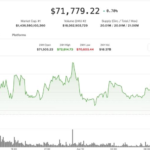
The downward trend has been mirrored across the market, with many Digital Asset Trust shares experiencing significant losses, particularly as Bitcoin’s spot price plummeted from over $126,000 in October to around $70,000 recently. Alongside the planned reverse stock split, Nakamoto registered more than 400 million shares for potential resale in a Form S-3 filing, aiming to provide existing investors with the opportunity to liquidate their holdings. Although this move does not generate new capital inflow, it creates a substantial overhang that could exert further pressure on the stock.
Additionally, Nakamoto has secured a shelf registration allowing for approximately $7 billion in future securities issuance. This exists alongside an at-the-market (ATM) program that permits the company to issue up to around $5 billion in new shares directly into the market over time. As Nakamoto navigates these challenging financial waters, its proposed strategies highlight the ongoing volatility and uncertainty within the cryptocurrency space.