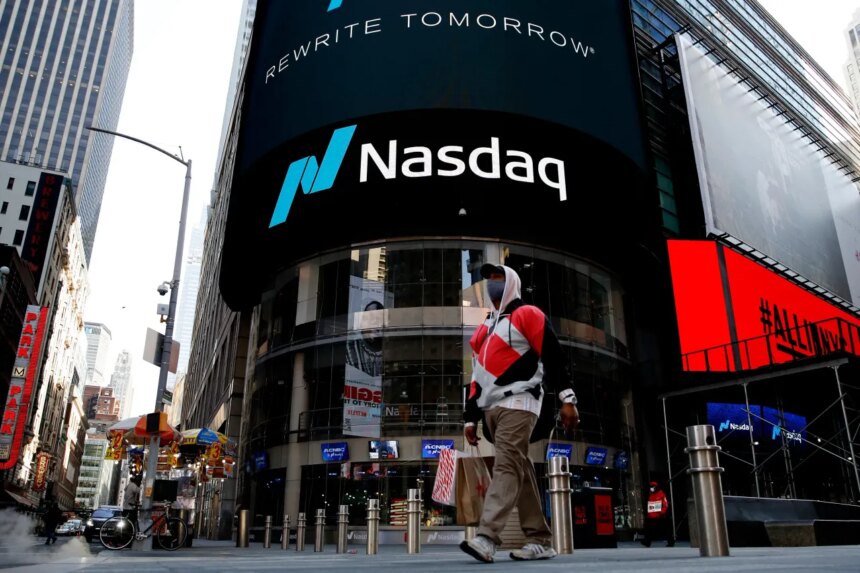
Nasdaq has submitted a proposal to the Securities and Exchange Commission (SEC) that could pave the way for investors to trade tokenized versions of stocks on its exchange. This move aims to complement the existing traditional digital trading format. The proposal is currently under SEC review, and if it receives approval, traders will have the option to engage in equity trading either through conventional methods or via on-chain tokenized stocks.
In early trading, shares of Nasdaq saw a modest increase of 0.3%. However, sentiment among retail investors on Stocktwits remained predominantly bearish regarding the company’s stock performance.
In its filing, Nasdaq expressed confidence that the market could successfully integrate tokenization while maintaining the essential benefits and protections provided by the national market system. The exchange operator proposed that tokenized assets be traded in regulated environments, including national securities exchanges and alternative trading systems, as well as through broker-dealers regulated by the Financial Industry Regulatory Authority (FINRA).
This initiative follows the announcement by Robinhood in July about rolling out tokenized stocks and exchange-traded funds (ETFs) specifically for its European users. This move stirred a mix of reactions, particularly concerning shares from private companies like SpaceX and OpenAI, with some figures, including OpenAI’s Sam Altman, expressing dissatisfaction.
Tokenization, which involves converting assets into digital tokens secured on a blockchain, is anticipated to facilitate faster trading and settlement. Moreover, it would enable trading outside of standard exchange hours. Notably, SEC Chairman Paul Atkins highlighted tokenization as a priority under ‘Project Crypto,’ aimed at developing an infrastructure for digital securities markets.
Nasdaq clarified that tokenized assets would be treated equivalently to traditional stock trades, maintaining that the clearing and settlement process would continue through the Depository Trust Company (DTC). The exchange specified that a preference for tokenized securities in an order would not influence the execution priority.
Under the proposed framework, stock trades would be recorded digitally and also logged on a blockchain ledger, providing innovative methods for tracking ownership and transaction evidence. Importantly, investors purchasing tokenized shares would retain full ownership rights, including voting and liquidation rights. Nasdaq indicated that tokenized trading for equities and ETFs could commence once the DTC finalizes the appropriate infrastructure and associated post-trade settlement services.