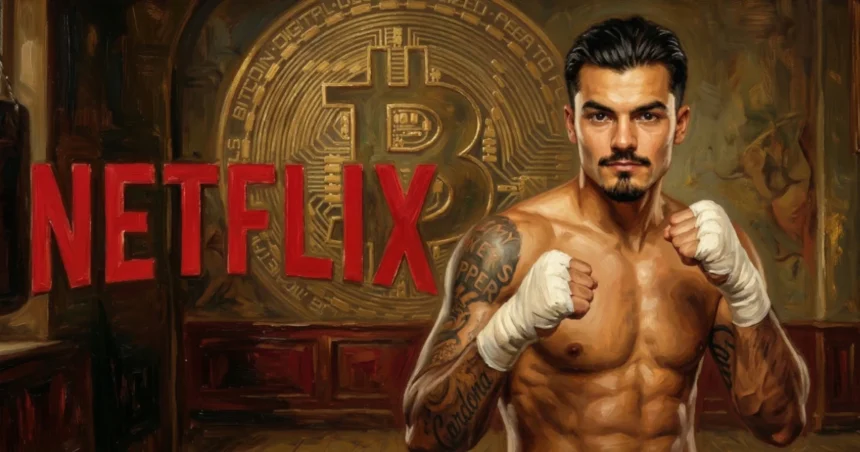
In a recent incident that has raised eyebrows in the world of sports sponsorship, Netflix, serving as the sole broadcaster for a high-profile boxing match, intervened just days before the event to block Bitcoin-related brands from appearing on the fight gear of welterweight boxer Justin Cardona. This last-minute decision, highlighted by Kent Halliburton, CEO of Sazmining—a company specializing in Bitcoin mining using renewable energy—signals ongoing challenges for cryptocurrencies seeking mainstream recognition.
The boxing event, featuring Cardona on the undercard of the much-anticipated match between Jake Paul and Anthony Joshua on December 19, 2025, was expected to draw a massive audience, with viewership estimates ranging from 20 million to 100 million. In mid-October, Sazmining, Bitcoin lending platform LEDN, and a Bitcoin logo had secured sponsorship placement on Cardona’s trunks, all of which had been approved ahead of the October 31 deadline. Following the paid invoices and public promotion on social media, it appeared that the sponsorship was set to proceed smoothly.
However, on December 12, just a week before the fight, promoter Most Valuable Promotions (MVP), collaborating with Netflix, informed Cardona’s team of a “secondary review” by Netflix. This review led to a prohibition of all Bitcoin-related content from being displayed during the fight, including on trunks, at press conferences, and during weigh-ins. The team was left scrambling to replace the custom-embroidered trunks at their own expense, highlighting the potential complications of sponsorship engagements in the sports arena.
Netflix’s reasons for the ban were summed up in a brief statement citing “Prohibited per our policy,” without further clarification. According to Halliburton’s insights into Netflix’s sponsorship guidelines, while the platform does restrict categories including weapons, drugs, and sexually explicit content, it vaguely categorizes financial services as “restricted,” requiring case-by-case approval. Notably, Bitcoin is not explicitly mentioned in these guidelines.
Interestingly, other sponsors within the same restricted categories managed to clear the approval process without issue. For instance, an insurance firm supporting Cardona was given the green light, while well-known betting platforms like Polymarket and Draft Kings—both associated with speculative financial activities—were prominently featured without facing restrictions. This apparent inconsistency drew attention to the selective enforcement of sponsorship policies.
Cardona expressed disappointment following the abrupt decision, emphasizing the pride he took in representing Bitcoin during what he considers the biggest fight of his career. “In the ring, I fight for every round because time is scarce and every punch counts. Bitcoin is the same way—there’s a fixed supply, no one can inflate it away,” he remarked.
Halliburton emphasized the growing institutional acceptance of Bitcoin, citing the influx of billions into spot ETFs from major investment firms and the discussions surrounding its potential inclusion in national reserves. The CEO criticized the continued censorship of Bitcoin and called for clearer guidelines from Netflix. He argued that if Bitcoin faces an outright ban, it should be explicitly stated in the policies to prevent confusion for athletes and businesses seeking legitimate sponsorship opportunities.
The incident underscores the ongoing challenges that Bitcoin-related businesses face in trying to establish a presence in mainstream sports and media, even as the cryptocurrency matures into a significant asset class. As Cardona prepares for future fights, he plans to prioritize environments that align with Bitcoin’s values, possibly boosting the visibility of cryptocurrency within the realm of combat sports. This episode raises critical questions about regulatory consistency and the future of Bitcoin in mainstream sponsorships.