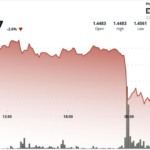
Netflix is facing a turbulent response after its announcement of a staggering $72 billion bid for Warner Brothers, with significant opposition surfacing almost immediately. Compounding the situation, a rival bid from Paramount Skydance has emerged, further complicating Netflix’s ambitious plan to bolster its content library and market position.
To discuss the implications of this unfolding scenario, the spotlight turns to John Klein, CEO of Hang Media, a platform dedicated to engaging Gen Z audiences. Klein, who also boasts a distinguished background as former president of CNN US, provided valuable insights into the dynamics at play.
In a brief exchange, Klein highlighted YouTube as a primary winner in this competitive landscape. He pointed out that YouTube garners nearly double the viewing time compared to Netflix on a monthly basis. This stark reality raises questions about whether the media industry, with its traditional studio-produced content, can effectively compete with the popularity fueled by user-generated content on platforms like YouTube. He suggested that instead of pursuing a costly acquisition like Warner Brothers, Netflix might be better off channeling resources towards developing its own version of YouTube or acquiring existing content studios that focus on creator-driven content.
Klein elaborated on this idea, mentioning the potential for Netflix to tap into the success of burgeoning content creators and studios, such as Darman Studios, which are resonating strongly with younger audiences. Furthermore, he emphasized that advancements in artificial intelligence could exponentially enhance the content creation landscape, indicating that the actual market dynamics may shift drastically in the near future.
While Netflix’s bid for prestigious franchises like “Game of Thrones” or “Friends” aims to increase its appeal against competitors like Amazon Prime and Disney Plus, Klein argues that such a strategy does not adequately address the looming challenge posed by YouTube.
He also touched upon the implications for advertising revenues. Though Netflix has recently introduced an ad-supported tier that contributes a modest 6% to its earnings, the ongoing uncertainty regarding its future and that of its competitors may lead commercial marketers to reconsider their spending strategies. As advertisers evaluate where to allocate their budgets in upcoming years, platforms like YouTube, Amazon, and Meta could find themselves in advantageous positions, benefiting from the confusion surrounding Netflix and other traditional streaming services.
As this high-stakes bidding war unfolds, the industry keeps a watchful eye on the potential winners and losers, with the outcome likely to reshape the streaming landscape for years to come.