As media organizations shift their focus, NewsGuard has emerged quietly in the background, dedicated to assessing the credibility of various news outlets. However, this seemingly modest player has found itself embroiled in a contentious battle with the Trump administration, which has escalated to a legal confrontation.
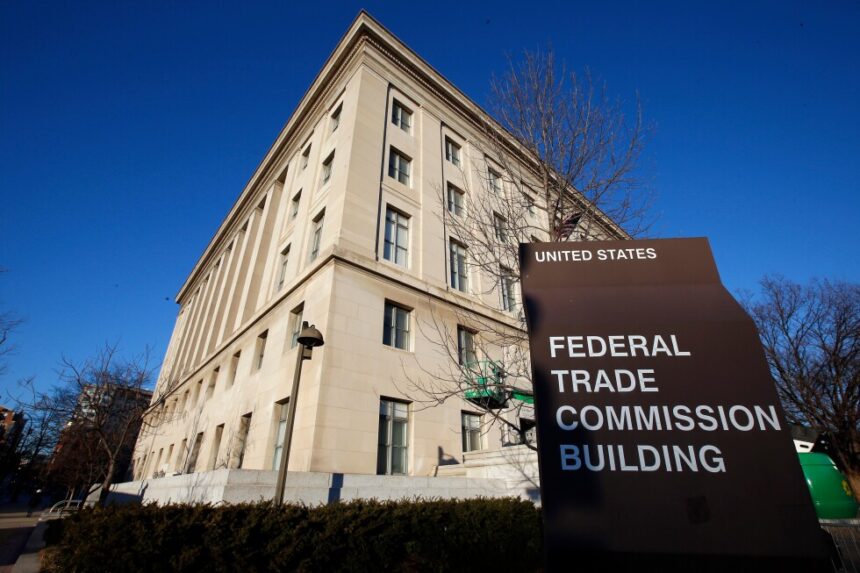
NewsGuard Technologies has taken legal action against the Federal Trade Commission (FTC) and its chairman, Andrew Ferguson, seeking an end to an investigation that the agency characterizes as an attempt to suppress conservative speech. The conflict reflects a broader trend of the current administration targeting media organizations that challenge its narrative, marking a significant moment in the ongoing tension between governmental power and journalistic integrity.
The lawsuit, filed in the U.S. District Court for the District of Columbia, accuses the FTC of misusing its authority to infringe upon free speech. NewsGuard contends that its assessments of news outlet reliability are being met with hostility solely because they diverge from the administration’s preferred narratives. In response, the FTC rebuffed these accusations, labeling them as disconnected from both legal and factual realities.
Under the Trump administration, the FTC has shifted from its typically subdued operations to become more actively involved in matters concerning media and speech, at times echoing similar trends seen in the Federal Communications Commission (FCC). Ferguson has publicly acknowledged that his agency’s priorities align closely with the directives of the administration, raising concerns about the fairness and objectivity of regulatory oversight.
NewsGuard’s operations, launched in 2018 by Court TV founder Steven Brill and former Wall Street Journal publisher Gordon Crovitz, focus on evaluating the reliability and credibility of thousands of news outlets. The service is increasingly vital, especially to advertisers aiming to connect with audiences in a media landscape often characterized by misinformation and polarization. The subscription model, priced at $4.95 per month, primarily caters to entities that guide advertisers in identifying trustworthy platforms.
However, friction arose between NewsGuard and the pro-Trump network Newsmax, which received a low credibility rating from the organization. Newsmax’s representatives have alleged that NewsGuard is targeting conservative outlets intentionally, suggesting that Brill’s political affiliations influence the ratings process. Despite these claims, Brill maintains that his only political involvement was in support of a Republican mayor decades ago, emphasizing his commitment to journalism as his enduring focus.
NewsGuard defends its rating system as one grounded in strictly defined, journalistic standards, assessing outlets on a variety of criteria including false reporting, argumentative distortion, and the differentiation between news and opinions. Critics, however, particularly from conservative circles, argue that NewsGuard disproportionately favors liberal outlets, fuelling claims of bias.
The FTC’s investigation reportedly stems from congressional inquiries linking NewsGuard’s operations to orchestrated efforts to damage the reputations of disfavored media entities. In pursuit of transparency, the FTC has demanded extensive documentation from NewsGuard, a request the company claims is excessive and burdensome.
As this controversy continues, it highlights a troubling precedent where the government questions the biases of private entities. Brill noted the constitutional implications of such oversight, arguing for the right of organizations to express their perspectives without governmental scrutiny or interference.
The FTC has indicated that its investigation is part of a broader effort to combat potential antitrust violations related to advertiser actions, suggesting NewsGuard’s services could influence the media landscape at a fundamental level. Critics of the agency’s actions remain concerned that such investigations could stifle independent evaluation of newsworthiness and integrity.
In this ongoing saga, both sides seem entrenched, with NewsGuard alleging that the FTC’s actions are designed to coerce compliance rather than genuine regulatory oversight. As the legal proceedings advance, the implications for media credibility, political speech, and the balance of power between governmental oversight and journalistic freedom hang in the balance.