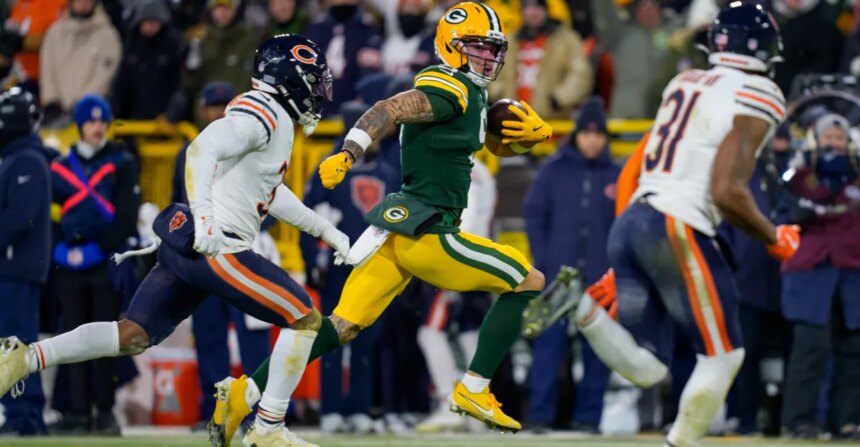
In the competitive landscape of the NFL, the economics of wide receiver contracts reveal a striking disparity. The recent contract signed by Detroit Lions’ Jameson Williams emphasizes this trend. Williams, who operates in a similar field-stretching role as Green Bay Packers’ wide receiver Christian Watson, secured a lucrative three-year deal valued at $27.7 million. This figure dwarfs what Watson will reportedly earn for an additional year in Green Bay, underscoring a significant gap in financial returns between receivers.
The NFL landscape currently features 24 veteran wide receivers making at least $20 million per year, highlighting the premium placed on established talent in the league. Yet, a concerning trend persists when examining the younger players on non-rookie contracts. Only six wide receivers under the age of 28 are earning between $5 million and $20 million annually, a range typically associated with declining veterans rather than emerging stars. This raises questions about the valuation of young talent in the league and the potential for growth.
Among the players who fall into this $5 million to $20 million bracket, Watson finds himself in the company of Jerry Jeudy, Khalil Shakir, Rashod Bateman, Tutu Atwell, Dyami Brown, and Josh Palmer. Examining their performance statistics, Jeudy stands out with an average of 856 receiving yards per season throughout his career (excluding 2025), making him a comparative outlier. Last year, he was traded for a fifth- and sixth-round pick, solidifying his status as a valued asset.
In contrast, the receiving statistics for the other players in this group illustrate varied levels of productivity. Bateman averages 481 yards per season, while Shakir, as the Buffalo Bills’ third receiver, averages 531 yards. Atwell and Brown have lower averages, sitting at 448 and 196 yards respectively. Palmer, meanwhile, has posted 572 yards, further accentuating the differing trajectories of these young receivers.
This situation draws attention to the significant financial frameworks surrounding wide receivers in the NFL, particularly as teams navigate the complexities of valuing their talent. The discrepancy in earnings could impact how young receivers are developed and deployed within their respective teams moving forward, especially as franchises strive to balance immediate performance needs with long-term investment strategies. As the league continues to evolve, the outlook for emerging stars like Watson remains a point of intrigue.