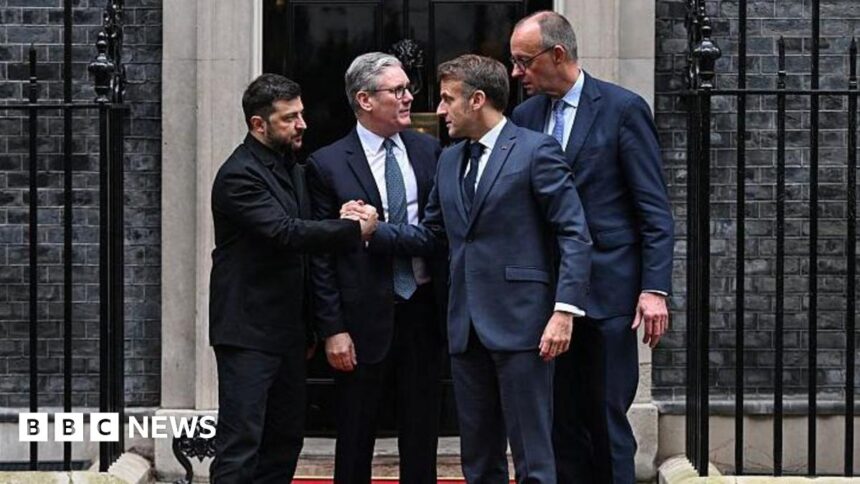
During a recent diplomatic meeting in Downing Street, leaders gathered to discuss unwavering European support for Ukraine amidst ongoing tensions in the region. However, the discussions took an unexpected turn with noteworthy remarks from German Chancellor Merz and French President Macron that deviated from the typical diplomatic script.
Chancellor Merz expressed skepticism about certain details emerging from Washington, a shift from the usual commendations directed toward the Trump administration’s efforts for peace in Ukraine. While he did not specify which aspects he found questionable, his comments indicated a growing cautiousness regarding U.S. strategies and their implications.
President Macron’s words were particularly striking as he stated that Europe possesses “a lot of cards in our hands.” This assertion was interpreted as more than just a reminder of Europe’s significant economic and diplomatic clout; it seemed to allude to recent tensions between the U.S. and Ukraine. The reference harkened back to a contentious moment earlier this year when President Trump rebuked Ukraine’s leader, suggesting he lacked the necessary leverage in negotiations.
Macron’s remarks highlighted not only the potential for Europe to influence the current conflict but also the necessity of effectively utilizing that power. The emphasis on holding cards versus playing them well draws attention to the strategic choices that lie ahead for European leaders.
As they navigate these complexities, the eyes of the international community remain fixed on how Europe will leverage its position in the ongoing geopolitical landscape. The discussions from Downing Street signal not just solidarity, but an emerging pragmatic approach that may reshape European engagement with both Ukraine and the United States moving forward.