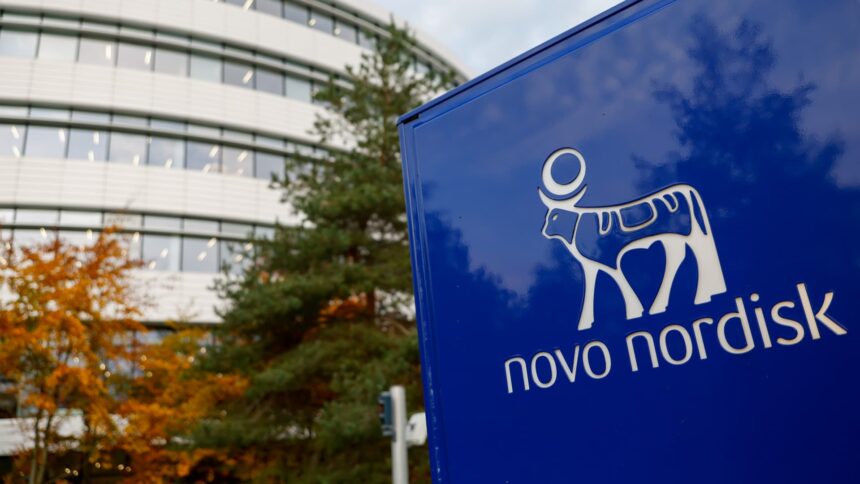
Novo Nordisk’s stock experienced a significant decline of 15% on Monday after the company announced that its next-generation weight loss drug, CagriSema, failed to meet its primary endpoint in a crucial clinical trial. The drug did not demonstrate non-inferiority in weight loss when compared to Eli Lilly’s rival treatment, tirzepatide, after a period of 84 weeks, according to a statement from Novo.
CagriSema, which combines the existing weight-loss medication semaglutide with cagrilintide—another hormone that regulates appetite—showed that patients taking the 2.4 mg dose achieved a 23% weight loss. In contrast, those on a 15 mg dose of tirzepatide experienced a loss of 25.5%. The disappointment from the trial results sent Novo Nordisk’s shares down to 256 Danish kroner, marking the company’s lowest trading level since June 2021.
Eli Lilly’s stock, on the other hand, saw a favorable reaction in premarket trading, rising by 3.5%. This comes as Novo’s products, semaglutide-based Ozempic and Wegovy, face stiff competition from Eli Lilly’s medications, which have captured a greater share of the U.S. prescription market.
In the wake of this setback, Novo Nordisk indicated that it is considering further trials to explore higher-dose combinations of CagriSema. The company remains optimistic about the drug’s potential, with Chief Scientific Officer Martin Holst Lange stating that it could be the first GLP-1/amylin combination product to reach the market specifically for individuals living with obesity. He emphasized that the additional benefits of cagrilintide could lead to significant improvements in weight loss outcomes compared to existing GLP-1 treatments alone.
However, the results of the clinical trial represent another challenge for Novo Nordisk, which has already seen its stock plummet nearly 50% since 2025. Earlier this month, the company had forecasted a decline in both sales and profit growth ranging from 5% to 13% in 2026. These projections reflect the heightened competition in the market, ongoing pressures from lower prices in the U.S., and the impending loss of exclusivity for its top-selling treatments, Wegovy and Ozempic, in specific markets.
CEO Mike Doustdar recently advised that stakeholders should brace for further declines before any potential recovery, underscoring the challenges that lie ahead for the company amid a rapidly evolving pharmaceutical landscape.