Investors in Novo Nordisk have seen a volatile year, primarily impacted by a significant decline in stock value during 2025. After experiencing a staggering 40% drop in its stock price, the Danish pharmaceutical company’s fortunes began to turn as the new year rolled in. This downturn was largely attributed to Novo Nordisk losing market share to competitors like Eli Lilly, which has introduced its own GLP-1 medications, Mounjaro and Zepbound.
In terms of earnings, the company’s performance reflected this struggle. Novo Nordisk reported earnings of $6.53 per share in the first quarter; however, by the third quarter, this figure plummeted nearly 30%, landing at just $4.50 per share. This decline raised questions among analysts and investors: does a 30% reduction in profitability adequately explain a 40% drop in stock price?
The beginning of 2026 marked a notable shift for Novo Nordisk. The stock surged by 3% on the first trading day of the year, signaling a renewed investor interest that many believed might have been influenced by year-end tax-loss selling in 2025. As the week progressed, shares continued to gain traction, accumulating a 22% increase year-to-date as of Thursday’s close.
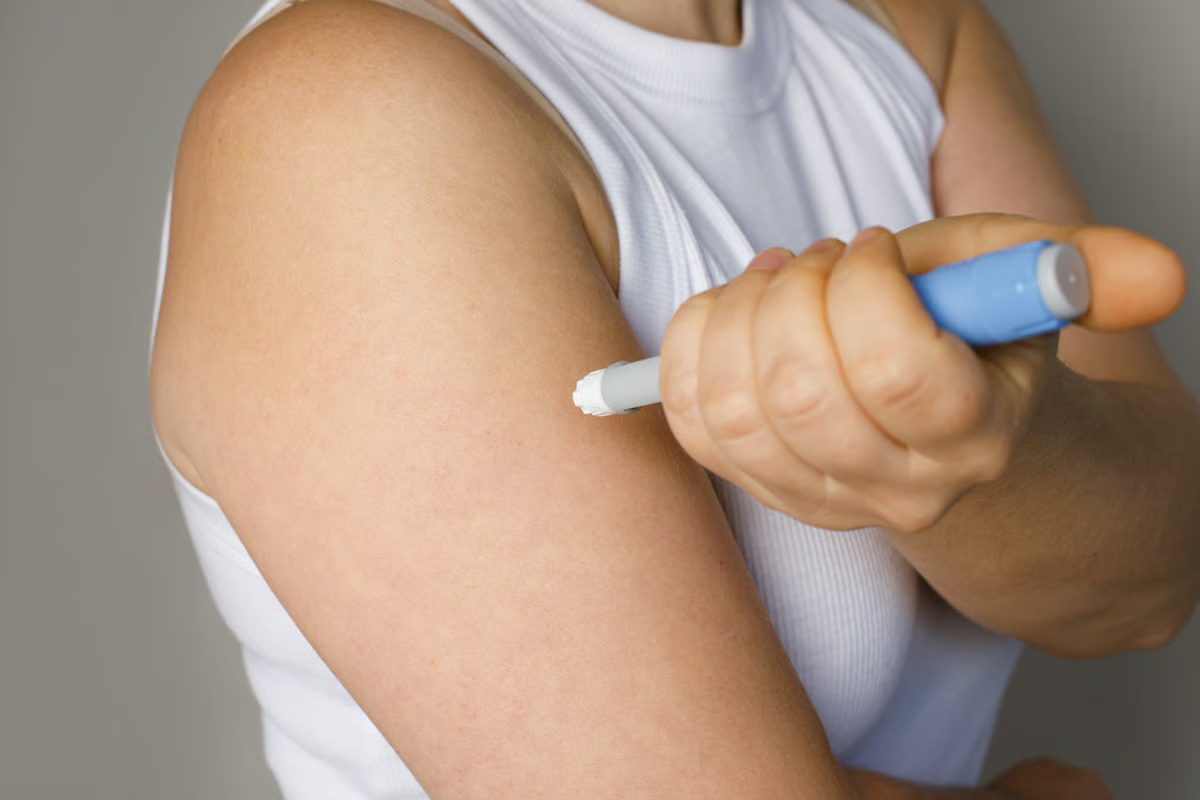
Supporting this upward movement are optimistic indicators regarding demand for Novo Nordisk’s products. Recently released data highlighted that 18,000 prescriptions for an oral version of Wegovy were issued in its second week of availability, overshadowing the 8,000 prescriptions for Eli Lilly’s injectable Zepbound. These figures suggest a robust demand for convenient pill-based GLP-1 medications, which may outpace needle-based alternatives in popularity.
In light of these developments, market analysts are closely monitoring Novo Nordisk’s performance, particularly as it trades at a relatively low price-to-earnings ratio of 17. Given the momentum from increasing prescription numbers and overall demand for its medications, there is a stronger sentiment that the stock will continue to rebound throughout 2026.