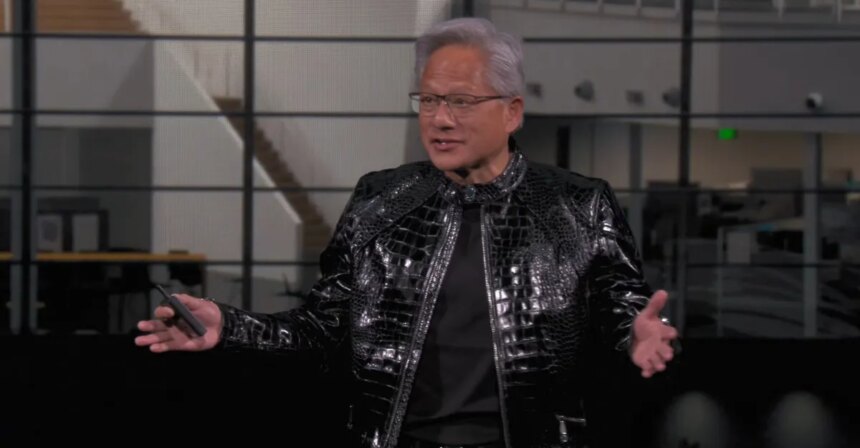
Nvidia has kicked off 2026 with a series of major announcements at CES, highlighting its latest technological advancements in AI, autonomous driving, gaming, and display technology. At the forefront is the introduction of the new Vera Rubin architecture, which was rolled out ahead of schedule. This architecture serves as the successor to the Blackwell architecture and is specifically designed for high-performance AI workloads.
Nvidia’s senior director of HPC and AI infrastructure solutions, Dion Harris, described the Vera Rubin platform, named after American astronomer Vera Rubin, as an “AI supercomputer” composed of six integrated chips. These components include the Vera CPU, Rubin GPU, and NVLink 6th-generation switch, among others, optimizing the training of complex AI models while increasing efficiency compared to previous architectures.
In an exciting move toward autonomous driving, Nvidia has unveiled its portfolio of AI models, known as Alpamayo, which aims to provide level 4 autonomy in vehicles. This advancement allows vehicles to operate independently under certain conditions, utilizing sensor inputs to control steering, braking, and acceleration. Nvidia CEO Jensen Huang emphasized the technology’s ability to rationalize actions before executing them, positioning Nvidia as a strong competitor against existing leaders like Tesla and Waymo. The technology will debut in the Mercedes-Benz CLA, with AI-assisted driving features hitting the US market this year.
In gaming, Nvidia has introduced the DLSS 4.5 update for its Deep Learning Super Sampling feature. This major upgrade enhances image quality and minimizes artifacts, supporting over 400 games and applications. The new update leverages a second-generation Super Resolution transformer model, offering significant benefits, particularly for users with newer RTX graphics cards, which can achieve a remarkable 6x Multi Frame Generation mode.
Nvidia is also expanding access to its cloud gaming service, GeForce Now, by announcing native apps for Linux and Amazon’s Fire TV. The beta version for Ubuntu 24.04 is set to launch soon, with plans for subsequent distribution releases. Additionally, the GeForce Now platform will support full flight control for users of Microsoft Flight Simulator 2024, enabling compatibility with various joystick and yoke models.
To augment its display offerings, Nvidia is set to release a new line of G-Sync Pulsar monitors on January 7. These 27-inch IPS displays feature a built-in light sensor that adjusts brightness and color based on the ambient light of the room, optimizing the viewing experience. Starting at $599, these monitors will provide a refresh rate of up to 360Hz, suited for both gaming and professional use.
With these announcements, Nvidia aims to position itself as a leader in various sectors, from AI infrastructure and automotive technology to gaming and display innovation, as it continues to shape the future of these rapidly evolving fields.