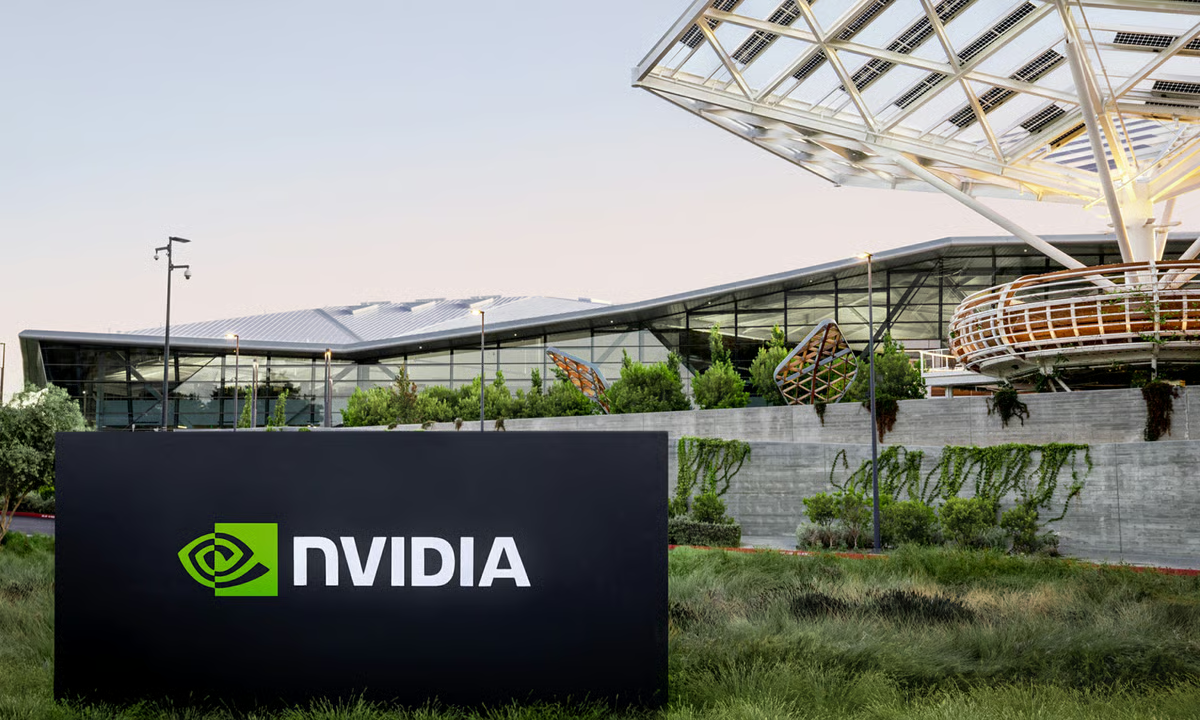
Nvidia is poised for a significant event as it prepares to release its fourth-quarter and full-year fiscal 2026 earnings report after market close next Wednesday. The company, renowned for its leadership in AI chip technology, stands with an impressive market capitalization of $4.7 trillion, attracting considerable attention from investors eager to see how its performance may impact its stock and broader market indices.
The tech giant has shown exceptional business momentum lately, demonstrated in its recent fiscal third-quarter update. Revenue surged by 62% year over year, reaching $57 billion, which marks an increase from the already impressive 56% growth observed in the previous quarter. Much of this growth is attributed to the data center segment, where revenue escalated by 66% to $51.2 billion, up from $41.1 billion in the prior fiscal quarter.
Profit margins also remain robust despite the rapid scaling of its operations, with a GAAP gross margin of 73.4% in fiscal Q3, slightly up from the previous quarter but down from 74.6% a year prior. Nvidia’s chief financial officer, Colette Kress, highlighted the extraordinary demand for AI infrastructure, stating, “The clouds are sold out, and our GPU installed base, both new and previous generations, including Blackwell, Hopper, and Ampere, is fully utilized.” For fiscal Q4, Nvidia anticipates revenues around $65 billion, suggesting a year-over-year growth rate of approximately 65.4%.
However, despite these impressive figures, concerns linger regarding Nvidia’s stock valuation. Currently trading at about 48 times earnings, the market appears to expect high growth rates to persist indefinitely. While the current growth trajectory supports such a valuation, there is inherent risk should growth rates decline or if Nvidia’s pricing power diminishes in the fast-evolving semiconductor sector.
Investors are advised to approach with caution. The prevailing belief suggests that significant market movements could occur in response to the upcoming earnings report. While some may view Nvidia as a compelling long-term play, others argue that the stock’s current price is too high for a prudent entry point.
For those considering initiating a position in Nvidia, careful sizing and a clear strategy are paramount, as the stock could experience volatility. The prevailing sentiment reflects a need for a more favorable entry point, especially in a market environment that demands a margin of safety for tech investments.
In conclusion, while Nvidia’s fundamental business performance remains strong, the stock price valuation prompts a prudent assessment. Currently, the risks associated with potential valuation compression urge caution for those contemplating immediate investment in Nvidia’s shares. For now, a wait-and-see approach appears to be the most prudent strategy for many investors.