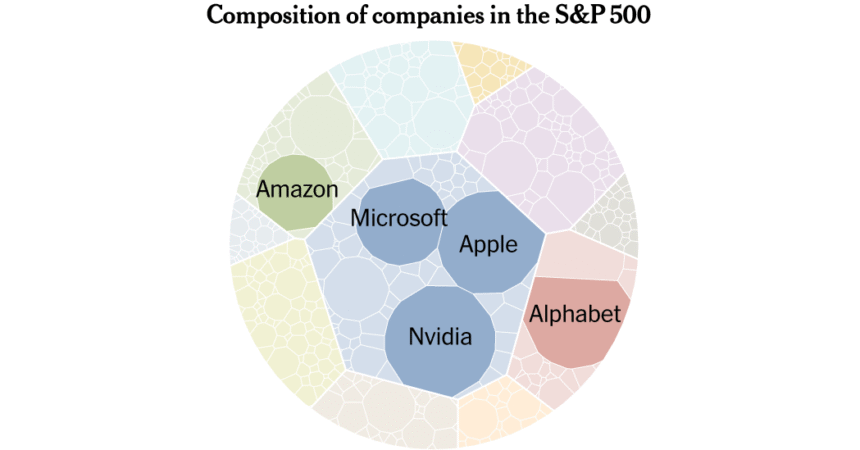
Nvidia, the leading chipmaker, has recently achieved a staggering market valuation of over $4.75 trillion, making it more valuable than all companies in the energy sector combined, including major players like Exxon Mobil and Chevron. This remarkable growth has positioned Nvidia 20 percent above the cumulative worth of all the companies in the materials, utilities, and real estate sectors.
Central to this meteoric rise is the company’s pivotal role in artificial intelligence (AI). Nvidia manufactures the essential hardware that drives AI, while key tech corporations such as Microsoft and Apple invest heavily in AI-integrated products for everyday consumers. However, rising concerns about the excessive expenses related to AI and its potential disruption to diverse economic sectors have led to increasing scrutiny of these tech giants. Their dominance in the market raises fears about masking vulnerabilities in other areas, suggesting that a downturn from a few of these companies could have cascading effects on investors’ portfolios and retirement funds.
This situation has triggered comparisons to previous economic crises, notably the dot-com bubble, when tech companies constituted a significant portion of stock indices, albeit not as disproportionately as today. Notably, the current concentration of the tech sector—which now comprises a third of the market—stands in stark contrast to its 26 percent share in December 1999 and 14 percent in August 2007 prior to the Great Recession.
The concentration of wealth within a select few companies has rendered the market increasingly unstable. Notably, following a major quarterly profit announcement, Nvidia’s stock price unexpectedly dropped by 5.5 percent. In 2026 alone, over a fifth of the stocks in the S&P 500 have experienced fluctuations exceeding 20 percent. Companies considered vulnerable to AI disruption have been particularly affected. The volatility is further exacerbated as businesses adapt to the evolving AI landscape.
Amid this transformation, the economy has witnessed a widespread impact from the AI boom. The burgeoning demand from data centers has significantly boosted growth in the utilities sector. Notable companies like NextEra and Exelon saw their valuations skyrocket in 2025. The industrial sector has also seen a dramatic shift. Although General Electric once dominated this space, the surge in data center infrastructure has led to a more balanced growth pattern. Caterpillar, traditionally associated with construction, is now closely rivaling GE, experiencing significant sales increases in turbines and power-generation equipment vital for data centers.
A key distinction between current tech leaders and those during the dot-com era is profitability. Many of the prominent companies of the late 1990s, such as Pets.com, flaunted high valuations without substantial revenue, resulting in rapid collapses when the bubble burst. In contrast, firms like Nvidia, Apple, and Alphabet report revenues in the hundreds of billions annually. Moreover, several significant players in the AI sector, including OpenAI, Anthropic, and SpaceX, are poised to go public in the near future, potentially amplifying market influences toward tech and AI even further.
This analysis employs data from S&P Dow Jones Indices, reflecting the reclassification of various sectors over time, with monetary figures adjusted for inflation. As the economy shifts and adapts to the intense focus on AI technologies, the implications for investors and the broader market landscape remain to be seen.