Recent market fluctuations have not broken the ongoing cycle of recovery, according to Alex Thorn, head of research at Galaxy Digital. In a recent note to subscribers of Galaxy Research’s Weekly Research Brief, Thorn discussed the events surrounding the sell-off that occurred on October 10. He attributes the initial downturn to high leverage interacting with thin order books, which was exacerbated by auto-deleveraging processes on exchanges that inadvertently affected market-maker shorts and further reduced liquidity.
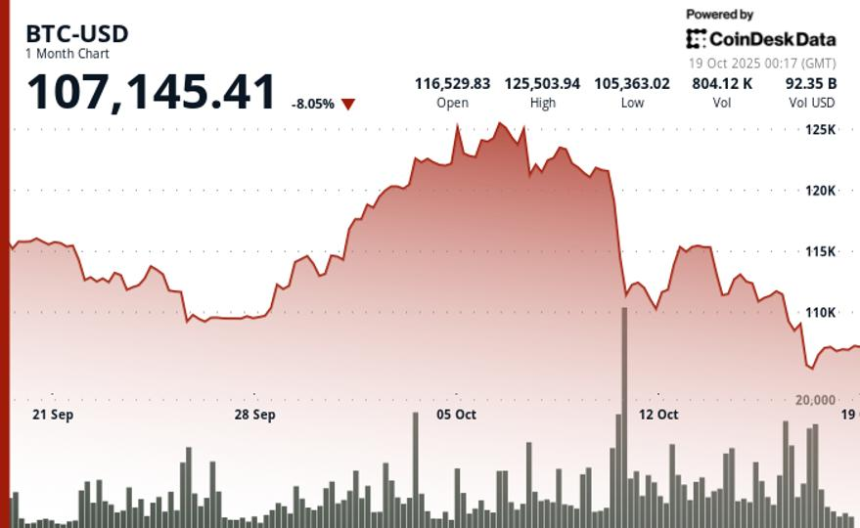
During this sell-off, Thorn reports approximately $19 billion in liquidations, with Bitcoin declining from an all-time high of roughly $126,300 on October 6 to an intraday low near $107,000. Ethereum also experienced a significant drop, falling from about $4,800 to approximately $3,500, before the markets began to stabilize over the weekend.
As risk appetite declined, macroeconomic concerns resurfaced. Thorn noted several factors contributing to this sentiment, including weakness in chip stocks, a more hawkish outlook from a Federal Reserve governor, emerging worries about regional banks, and general geopolitical instability. This risk-off attitude was further reinforced by traditional market indicators, with gold and silver hitting new highs and the 10-year Treasury yield dropping back below 4%.
Thorn identified a specific drag on the cryptocurrency market: a slowdown among digital asset treasury companies. With equity prices declining in this sector, there has been a decrease in price-insensitive investments flowing into cryptocurrencies, adding to immediate market fragility, even after the initial sell-off.
Despite the short-term challenges, Thorn remains optimistic about the medium-term outlook for cryptocurrencies and identifies three key drivers that could propel growth. First is the surge in capital spending on artificial intelligence. He describes the current investment wave as a real-economy capital expenditure cycle, led by financially robust companies like hyperscalers, chip manufacturers, and data-center operators, sustained by considerable policy support from the U.S. government. He argues that this creates a favorable long-term environment for growth.
The second driver is the increasing adoption of stablecoins. Thorn emphasizes that dollar-linked tokens are shaping up as vital payment mechanisms, leading to broader participation, enhanced liquidity, and greater activity on public blockchain networks. This infrastructure can help stabilize the ecosystem during periods of price volatility.
Thirdly, Thorn discusses the trend of tokenization—bringing real-world assets and components of traditional market structures onto blockchain. He notes that this transition is moving from pilot projects to full-scale implementation, generating new demand for blockchain space and core assets that facilitate this activity.
In this context, Thorn continues to view Bitcoin as a “digital gold,” particularly amid ongoing concerns regarding fiscal and monetary policies. He also sees potential for established cryptocurrencies like Ethereum and Solana, especially linked to the use of stablecoins and ongoing tokenization efforts, although he cautions that short-term rallies may struggle to surpass previous highs.
The overarching sentiment from Thorn’s analysis is one of caution. He advises market participants to remain aware of the thinner liquidity and the psychological aftermath following the recent market crash. Nevertheless, he expresses confidence in the resilience of the medium-term outlook, pointing to the three identified tailwinds that could foster upward momentum once the markets have fully digested recent shocks.