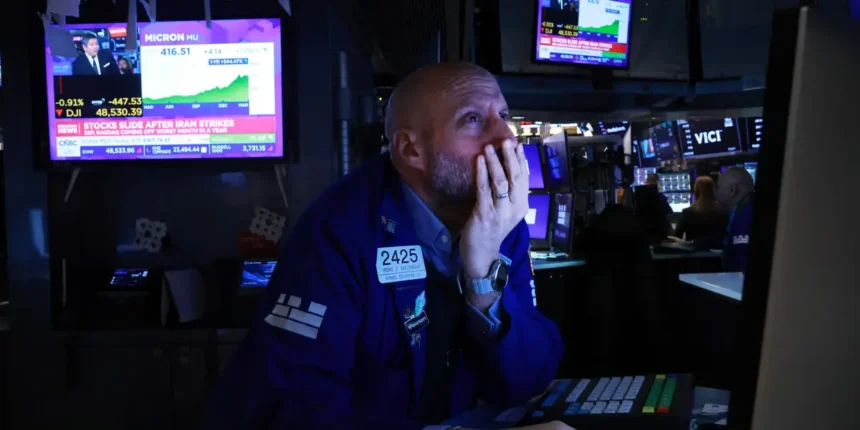
In recent commentary, Ed Yardeni, the president of Yardeni Research, highlighted a troubling escalation in oil prices, attributing the surge to ongoing conflicts in Iran. He foresees a significant risk of a stock market downturn that could derail the current bullish trend. Yardeni indicated that the chances of a stock market “meltdown” have risen to 35%, a marked increase from the previous estimate of 20%. Conversely, he placed the likelihood of a sharp increase in stock prices, or a “meltup,” at only 5%.
The rise in crude oil prices not only poses a threat to the stock market but also heightens concerns about stagflation, a scenario characterized by soaring inflation coupled with stagnating economic growth. Yardeni now assesses a 15% probability of encountering a “Stagflating 1970s Redux,” a situation reminiscent of the economic challenges of the 1970s.
Yardeni remarked that while rising oil prices might lead to a market correction, the possibility of a bear market looms larger if investors begin to anticipate a prolonged period of stagflation. The escalated tensions that have led to the spikes in oil prices have instilled fears among investors, particularly since the U.S. and Israel’s military actions against Iran, a significant crude oil producer.
Historically, sharp increases in oil prices have often coincided with economic recessions and bear markets. Yardeni cited the aftermath of the 1979 Iranian Revolution, which precipitated a surge in oil prices and contributed to inflation reaching 14% in the United States by 1980, leading to an economic downturn.
The current inflationary environment also constrains the Federal Reserve’s options for lowering interest rates, a crucial factor that has been supporting higher stock market prices. Yardeni noted the precarious position of the U.S. economy and stock market, stuck between the ongoing conflict in Iran and the resultant economic pressures. He emphasized that the Fed’s dual mandate will face challenges as it navigates rising inflation alongside increased unemployment rates.
While acknowledging the heightened risks, Yardeni maintained that his firm still holds a relatively optimistic outlook regarding the overall impact of the conflict. He anticipates that the situation may persist for a few more weeks but expects economic growth and corporate earnings to remain stable. He quantified the potential correction in stock prices at 10% to 15% due to high oil prices, while assigning a 60% probability to the continuation of the “Roaring 2020s” paradigm, characterized by climbing stock prices and booming productivity.
The war in Iran has exacerbated the already shaky sentiment on Wall Street, which has dealt with significant tech stock sell-offs since the beginning of the year. With crude oil prices surpassing $100 per barrel—and potentially reaching $120—market analysts warn that this situation could trigger a recession.