Oil prices are anticipated to surge by 5 to 15 percent when trading resumes on Sunday evening in New York, as traders assess the immediate consequences of a near-complete halt to energy flows from the Middle East. This market movement comes amid escalating tensions following missile attacks from Iran on neighboring countries, leading to significant disruptions in the Strait of Hormuz—an essential maritime route for global oil shipments.
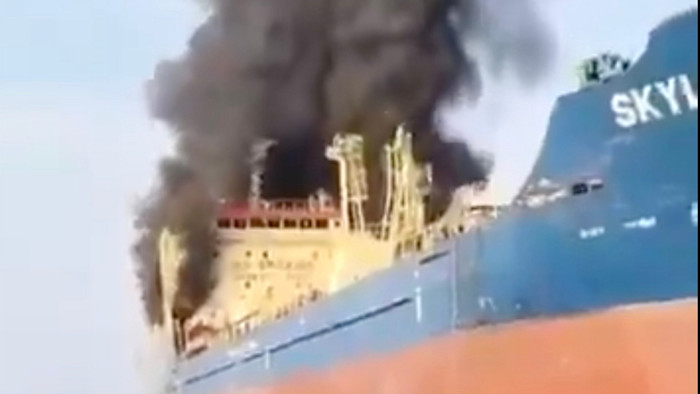
Despite Opec+—a coalition that includes Saudi Arabia and other major oil producers—implementing a production increase of 206,000 barrels a day from April, experts caution that this additional supply will have minimal effects if disturbances in the region persist. As of Sunday, activities in the Strait of Hormuz, which sees about 20% of the world’s oil and gas transit, had diminished significantly. Reports indicate that two ships were struck near the inlet, one being linked to Iran’s shadow fleet and the other carrying approximately 500,000 barrels of gasoline from Europe to Saudi Arabia, as confirmed by ship-tracking data.
Maritime security experts are advising clients to steer clear of the Strait for at least the next 24 hours due to the prevailing uncertainty. “It’s a bit of a wait-and-see game for now,” commented Jakob Larsen, head of maritime security at Bimco, the leading international shipping association. Insurers are reacting to the heightened risks by warning that premiums for vessels navigating the Strait could increase sharply, with some war-risk insurers possibly excluding coverage for ships associated with the U.S. or Israel. Broker Marcus Baker noted, “Some might feel that actually this is just too dangerous,” hinting at a rise in shipping costs in the Gulf.
Dozens of vessels were reported to be congregating near the entrances of the Strait, awaiting a resolution to the rising tensions. Analysts suggest that even with Opec+’s output increase, the market’s stability is unlikely to return soon. Prices may increase by an estimated $5 to $10, as benchmark Brent crude settled below $73 a barrel on Friday, already up over 20% since the year’s beginning, partly in anticipation of potential Iranian hostilities.
Jorge León, an analyst at Rystad Energy, emphasized that “If oil cannot move through Hormuz, an extra 206,000 barrels per day does very little to ease the market.” He indicated that the oil market’s reaction will primarily depend on developments in the Gulf rather than minor production expansions. Meanwhile, Tamas Varga, an analyst at PVM Energy, highlighted that traders would remain apprehensive about attacks on neighboring oil-producing nations, further complicating the already fragile situation in the Strait.
Chinese stockpiles may provide some buffer against the disruptions, but a temporary cessation of shipping could compel oil refineries—unable to halt production—to source supplies from alternative locations, contributing to increased prices. Analysts at Energy Aspects speculated that speculators who had taken short positions before the weekend’s turmoil might look to quickly close these, adding further volatility to the market.
With the current phase of conflict expected to continue for several days, the potential for sustained price dislocation remains. Investors are bracing for increased oil prices, highlighting the enduring risk premium associated with geopolitical developments in the region.