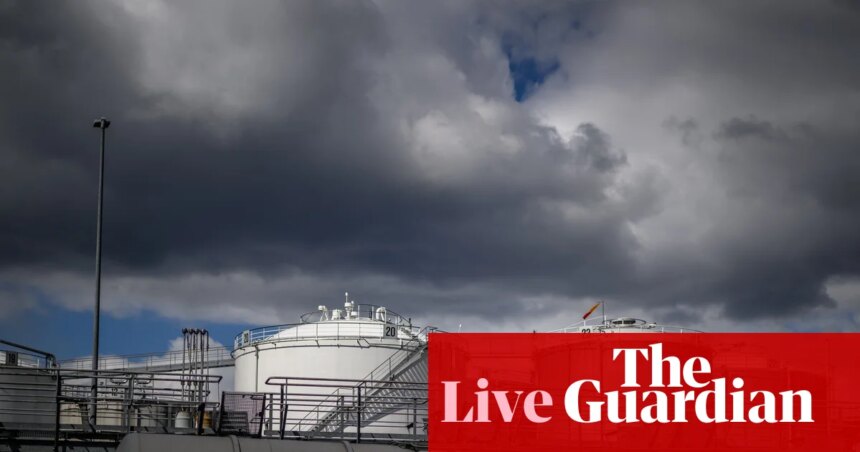
Oil prices have seen a significant decline amid rising optimism regarding a de-escalation of tensions in the Middle East, particularly related to the ongoing conflict involving Iran. Following a remarkable monthly gain, Brent crude has plummeted by approximately 13%, settling at around $103 per barrel. This shift in the market follows remarks from U.S. President Donald Trump, who indicated that military operations against Iran could conclude within two to three weeks. He stated, “Now we’re finishing the job. I think in two weeks or maybe a few days longer, we’ll do the job. We want to knock out everything they’ve got.”
Anticipation is building for Trump’s address to the nation scheduled for later tonight, which may provide further insights into the U.S. strategy moving forward. Asian markets reflected this newfound optimism, with notable increases in major indices—China’s CSI 300 index rose by 1.5%, Japan’s Nikkei surged by 4.9%, and South Korea’s KOSPI experienced an impressive 9.5% leap. This positive sentiment was also echoed in Wall Street, where the Dow Jones Industrial Average gained 2.5% in response to the developments.
Adding to the optimistic outlook, Iranian President Masoud Pezeshkian expressed a willingness to conclude the conflict, but only with assurances against future aggressions. Analysts are interpreting this exchange of more constructive rhetoric between the U.S. and Iranian officials as a potential pathway to further risk-taking among investors. Chris Weston, head of research at Pepperstone, remarked that the market is treating recent headlines as encouraging signs that could push both parties towards a peace agreement.
In stark contrast, expectations of interest rate hikes by the Bank of England have dimmed. As confidence grows over a possible resolution to the Iran war, traders are adjusting their forecasts for UK rate increases, anticipating only around 41 basis points of rise by the end of 2026. This indicates a notable drop from previous projections, where traders expected as many as three hikes by the end of the year.
In addition to shifts in the oil market and interest rate forecasts, gold has reached its highest value in nearly two weeks, following a surge of 3.5% yesterday. It climbed another 0.8% today, exceeding $4,700 per ounce. Market analysts suggest that a potential resolution to the Iran conflict could have a dual impact on gold prices, eliminating the geopolitical risk premium while also alleviating inflation worries, which could lead to cuts in Federal Reserve rates later on.
Investors await a series of critical economic data releases, including Eurozone manufacturing PMI, UK manufacturing PMI, and U.S. manufacturing PMI throughout the day, which could further influence market movements.
Meanwhile, the Food and Drink Federation reported that UK food inflation is projected to soar to at least 9% by the end of the year, exacerbated by the ongoing conflict. This marks a stark increase from their earlier estimate of 3%, spotlighting the significant pressures faced by food producers amid rising energy and fertilizer costs. The federation indicated that stability in the Straits of Hormuz and a return to normal energy production could be crucial for future price stabilization.
As households brace for increased costs of essentials, including council tax and water bills, the prospect of declining energy prices following an end to hostilities may offer a glimmer of hope in easing the burdens faced by consumers. Overall, markets are cautiously optimistic, navigating the intersection of geopolitical developments and economic forecasts.