Oil prices surged past $110 a barrel on Tuesday following provocative statements made by former President Donald Trump regarding Iran. Brent crude, the international oil benchmark, rose by 1% to $111 a barrel, while New York light crude saw a more significant increase of 2.6%, climbing to $115.30 a barrel.
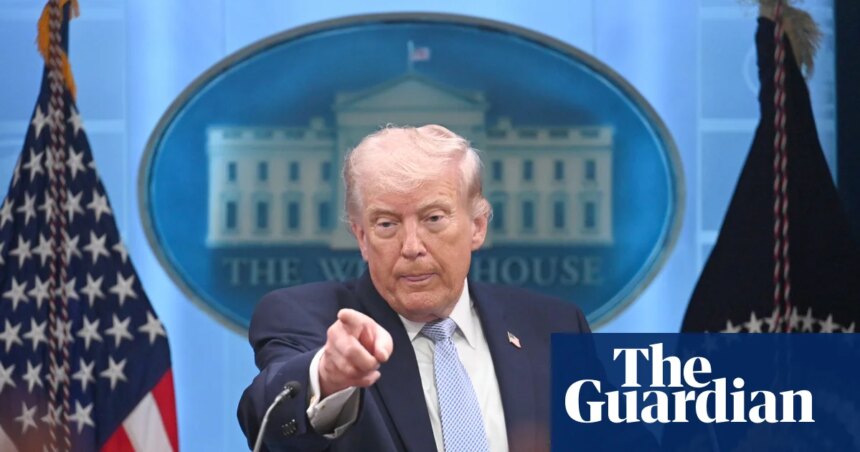
Investor concerns are mounting as Trump intensifies his rhetoric aimed at Iran, insisting that the country must reopen the strategically important Strait of Hormuz as part of any negotiations to halt ongoing hostilities. Speaking from the White House on Monday, Trump set a deadline of Tuesday at 8 PM ET (1 AM BST Wednesday) for Iran to reach an agreement with the United States. He warned that failure to comply could result in severe strikes against Iran’s civil infrastructure, including critical facilities such as power plants.
“The entire country can be taken out in one night, and that night might be tomorrow night,” Trump declared, underscoring the urgency of the situation. He emphasized that ensuring safe passage through the Strait of Hormuz—through which approximately one-fifth of global oil and gas supplies flows—was a “very big priority” that should be prioritized in any ceasefire arrangements.
Amid these geopolitical tensions, Asian stock markets reacted with mixed outcomes. Japan’s Nikkei index remained relatively stable, while South Korea’s Kospi climbed by 1.1%. Conversely, Hong Kong’s Hang Seng index recorded a decline of 0.7%. In Europe, the UK’s FTSE 100 index dipped by 0.2% in early trading, while France’s Cac 40 index rose by 0.5%. Meanwhile, Germany’s Dax 30 saw a slight decline of 0.1%, leaving the Stoxx Europe 600—a broad measure of significant European companies—roughly unchanged, up less than 0.1%.
Market fluctuations have been prevalent since the US-Israel attack on Iran in February, leading to fears surrounding inflation and increased unease among investors. On Monday, Kristalina Georgieva, the Managing Director of the International Monetary Fund (IMF), voiced concerns that the ongoing war is likely to exacerbate inflation and hinder global economic growth. Georgieva disclosed that prior to the conflict, the IMF had anticipated a slight upgrade in its growth projections—3.3% for 2026 and 3.2% for 2027. However, the current forecast suggests that “all roads now lead to higher prices and slower growth.”
“We are in a world of elevated uncertainty,” she added, highlighting various contributing factors including geopolitical tensions, climate-related disruptions, demographic changes, and rapid technological advancements. “All of this means that after we recover from this shock, we need to keep our eyes open for the next one,” she warned, emphasizing the importance of vigilance in navigating these turbulent times. The IMF is expected to release its updated world economic outlook report next week, which will likely reflect the effects of current global developments on anticipated growth.