Oil prices experienced a significant increase on Sunday following threats from Iran to indefinitely shut down the strategically vital Strait of Hormuz. This move comes in light of President Donald Trump’s ultimatum demanding the restoration of oil traffic through the busy shipping lane.
At the opening of the market, Brent crude, the global oil benchmark, surged by 1.69% to nearly $114.09 per barrel, while U.S. crude saw a 2% rise, reaching $100.29. Analysts at Goldman Sachs indicated that such elevated prices could persist through 2027, suggesting long-term implications for both markets and consumers.
Trump issued stern warnings over the weekend, stating that the U.S. would “obliterate” Iran’s power plants if the Strait of Hormuz is not reopened by Monday evening. In a swift response, Iranian officials declared that any military action by the U.S. would result in a total closure of the strait, lasting until the reconstruction of any damaged infrastructure. Furthermore, Iran threatened to target energy and communications facilities belonging to the U.S. and Israel within the region.
The ongoing conflict in Iran has now entered its fourth week and has contributed significantly to disruptions in oil supply chains, primarily due to the effective blockage of the Strait of Hormuz, which is the world’s busiest oil shipping route.
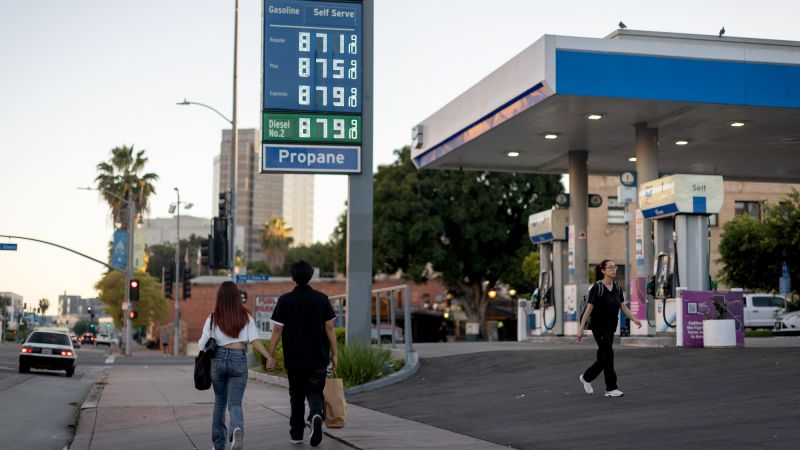
In the U.S., the rise in oil prices has begun to exert pressure on consumers at gas stations. The national average price for a gallon of gasoline climbed to $3.94 on Sunday, marking an increase of almost a dollar since the onset of the conflict. Experts anticipate that gas prices could hit $4 per gallon as early as Monday. Patrick De Haan, head of petroleum analysis at GasBuddy, cautioned that even after the war concludes, gas prices are unlikely to decrease quickly. “It’s going to be a snail’s pace for as long as this continues to stretch out, because it will take much more time for markets to globally mend,” he said.
On the economic front, Treasury Secretary Scott Bessent addressed the potential impact of the conflict on the U.S. economy during an appearance on NBC’s “Meet the Press.” He suggested that Americans might be willing to accept “temporary elevated prices” if it were to lead to lasting peace in the Middle East.
The financial markets also reacted to these developments, with stock futures declining at the open on Sunday. The Dow Jones futures fell by 0.6%, equating to a drop of 237 points, while both the S&P 500 and Nasdaq futures experienced decreases of 0.6% and 0.8%, respectively.