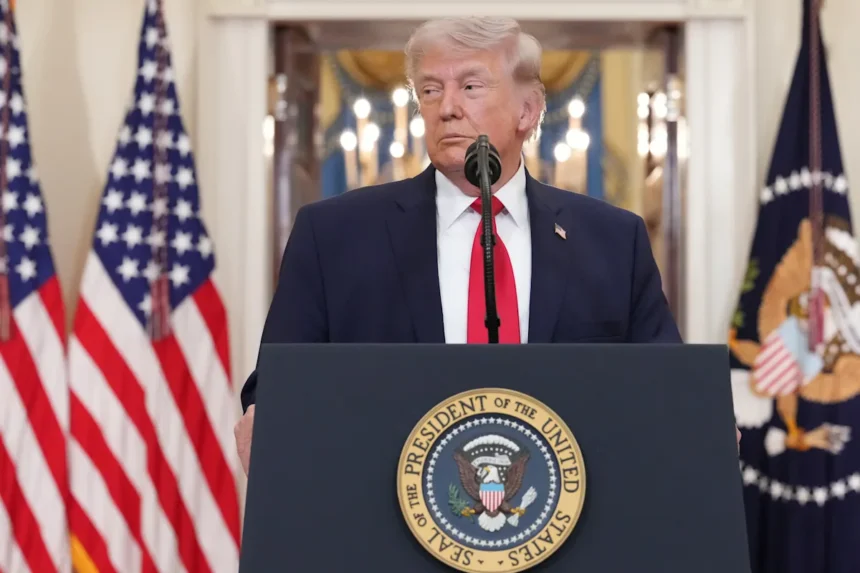
Oil prices surged while US equity futures declined following President Trump’s address to the nation on Wednesday evening. During his speech, Trump reiterated that the United States is nearing the completion of its objectives regarding Iran, but he also emphasized that the conflict is far from over.
After experiencing significant losses earlier in the day, futures for Brent crude, the international benchmark, climbed by approximately 4.3%, trading above $105 per barrel. This marked a notable rebound from below $100 earlier in the session. Similarly, futures for West Texas Intermediate (WTI) crude also turned positive, gaining around 3.8% and trading near $104 per barrel.
In contrast, futures for the S&P 500, Dow Jones Industrial Average, and Nasdaq 100 saw declines of more than 0.8% as the night progressed. Trump’s speech, while lacking in substantially new information, suggested an escalation of US involvement in the conflict, with the President stating that the US aims to significantly weaken Iran’s capabilities to threaten global security.
The President reiterated a timeline of two to three weeks for US involvement, a point he had previously mentioned to reporters. Reports indicate there has been some consideration about withdrawing US military presence from Iran without resolving the issue of control over the strategically important Strait of Hormuz. Trump did not strongly address this particular concern during his address.
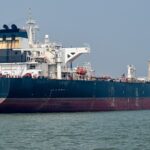
Stressing the international implications of the Strait of Hormuz, Trump stated that other countries should take the lead in ensuring its security. “We will be helpful, but they should take the lead,” he remarked, encouraging other nations to safeguard this critical passage through which one-fifth of the world’s oil passes. He claimed that the strait could be secured easily and perhaps “may also open up naturally.”
Moreover, the President asserted that the US has achieved energy independence from the Middle East, claiming, “We don’t need their oil.” He emphasized that the US military presence is to assist its allies rather than to secure oil interests. This assertion further reflects the administration’s stance on reducing reliance on foreign oil sources while maintaining strategic partnerships in the region.