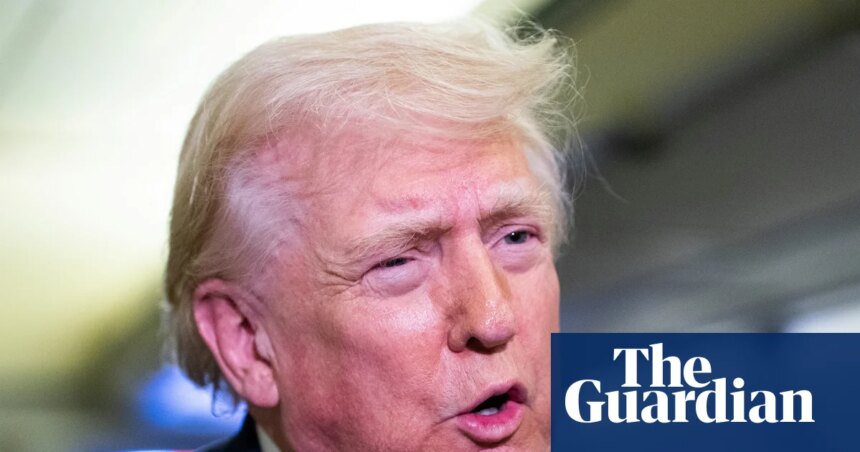
The price of oil has surged dramatically to $116 a barrel following comments from Donald Trump regarding Iranian oil. In a recent interview with the Financial Times, Trump expressed a desire to “take the oil in Iran,” specifically mentioning the strategic export hub of Kharg Island. This statement has rattled Asian stock markets, with Brent crude, the international oil benchmark, experiencing a 2% increase early on Monday.
As the implications of these remarks sank in, stock markets across Asia reacted sharply. Japan’s Nikkei index fell by 3%, while South Korea’s Kospi dropped 3.4%. Hong Kong’s Hang Seng index also saw a decline of approximately 1%. European stock markets followed suit, opening slightly lower; the European Stoxx 600 index fell by 0.1%, though London’s FTSE 100 managed a slight gain of 0.2%, buoyed by mining firms such as Rio Tinto and Glencore.
Natural gas prices in Europe have also risen, with Dutch month-ahead futures increasing by 1.6% to over €55 per megawatt-hour, reflecting growing concerns about potential supply disruptions amidst escalating tensions in the Middle East. The situation has intensified further, with an additional 3,500 US troops deployed to the region, and Houthi rebels in Yemen launching ballistic missiles at Israeli targets, raising alarms over the widening conflict.
Analysts at Deutsche Bank noted that investor anxiety is palpable, as there seems to be no imminent resolution to the hostilities. Oil prices are experiencing unprecedented upward pressure, with Brent crude poised for its largest monthly increase on record—a staggering 59% rise since early March, surpassing the previous record set in September 1990 during the Gulf War.
In the UK, Prime Minister Keir Starmer is set to meet with executives from major oil companies, including Shell, BP, and Equinor, to discuss the potential repercussions of the Middle East crisis and explore emergency measures to mitigate the impact on energy prices. The situation is precarious, with Brent crude having touched $119.50 per barrel earlier in March, nearing its highest level since June 2022.
Amid these developments, Ipek Ozkardeskaya, a senior analyst at Swissquote, highlighted the speculative nature of the oil market. She warned that crude prices could rise to levels as high as $150 or even $200 per barrel if the conflict persists, although such prices could significantly dampen global demand and increase the risk of a recession.
In other commodity markets, aluminium prices spiked over 5% in Asia following Iranian strikes on aluminium production facilities in Bahrain and the UAE. Concurrently, UK Chancellor Rachel Reeves is expected to emphasize the need for G7 nations to accelerate their transition to clean energy in order to protect their economies from future oil and gas price shocks. As the conflict continues to strain supplies, there are warnings of possible “temporary shortages” at petrol stations across the UK, with average petrol prices now exceeding 150p per litre.