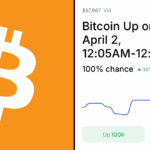
The past month has been tumultuous for Bitcoin traders, with prices closely reacting to fluctuating statements from President Donald Trump regarding Iran. The market oscillates between optimism and despair, fueled by Trump’s conflicting messages on peace and military action. When he advocates for peace, Bitcoin and other risk assets tend to rise, while oil prices decrease. Conversely, a hawkish stance from the president sends Bitcoin values tumbling and oil prices climbing.
This volatility is compounded by Iran’s declaration that the Strait of Hormuz is “closed forever,” prompting analysts to make wildly varying predictions for oil prices. These actions create a complex and unpredictable environment for traders.
Given the circumstances, it may be beneficial for traders to focus on certain fundamental indicators that reflect the underlying issues affecting risk assets, particularly Bitcoin. Unfortunately, these indicators do not present an encouraging outlook.
As the situation stands, the fate of the global economy and risk assets may hinge on the coming weeks as an anticipated disruption in oil supply threatens to become more acute. Following the commencement of hostilities with Iran on February 28, tanker traffic through the vital Strait of Hormuz—responsible for approximately 20% of the world’s seaborne oil trade—has drastically dwindled. In response, member countries of the International Energy Agency (IEA) executed what is now recognized as the largest coordinated strategic stock release in a half-century, initially allocating around 400 million barrels, later increasing to 426 million as more nations contributed to the effort.
However, the effectiveness of these emergency reserves at offsetting a daily shortfall of approximately 4.5 to 5 million barrels is nearing its limit. Analysts project that these reserves could be exhausted in a couple of weeks, potentially leading to a critical situation where the manageable oil deficit could balloon to about 10 to 11 million barrels per day due to reserve depletion and disruptions in standard flows. The House of Saud has characterized this impending crisis as one of “unprecedented scale” without a clear buffer remaining to stabilize the market.
Irrespective of whether Trump intensifies or reduces military actions against Iran, the overarching concern remains: unless oil supplies see substantive restoration within a fortnight, a widespread aversion to risk is likely to permeate both cryptocurrency and traditional financial markets.
Another concerning development involves the soaring ship insurance premiums for vessels navigating the Strait of Hormuz. These costs have escalated dramatically—from less than 1% of a ship’s value before the conflict to as high as 7.5% per journey. For instance, a $100 million tanker now faces insurance costs of approximately $2-3 million, compared to just $250,000 prior to the outbreak of hostilities. A decrease in insurance premiums below 2% would signal a genuine safety improvement for the route, presenting a more favorable environment for risk-taking in the markets. In this regard, no presidential press conference or social media update can instill the same level of confidence as favorable insurance pricing.
Further complicating matters, despite Trump’s assertions that transit through the Strait of Hormuz could be secured, there is little evidence to suggest that tanker traffic has rebounded to normal levels. Since the onset of the conflict, only 21 tankers have successfully navigated Hormuz, a stark contrast to the more than 100 vessels operating daily prior to the war, according to data from S&P Global Market Intelligence. A significant recovery in tanker traffic is necessary for a sustainable rally across risk assets. Until that happens, any attempts from Trump to soothe the markets are likely to be fleeting.