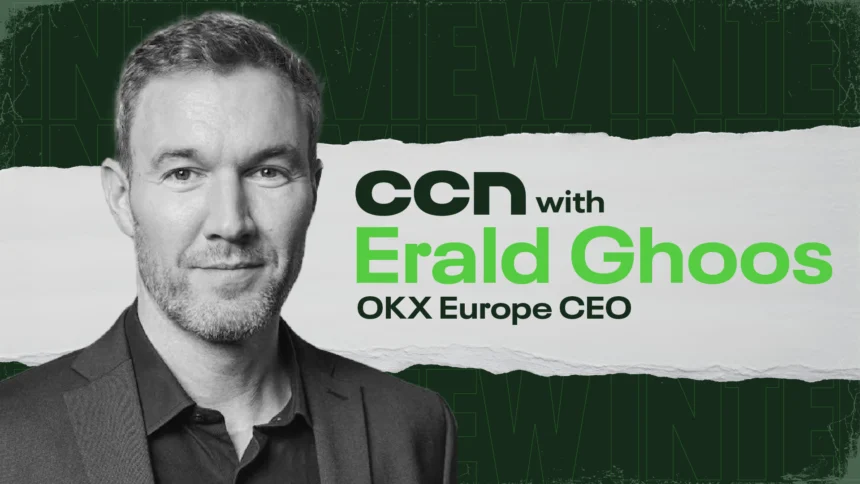
The landscape of cryptocurrency in Europe is poised for significant transformation, particularly following the recent developments concerning regulations and institutional interest. In a notable move, OKX secured its MiCA license in January 2025, becoming the first global exchange to operate under the EU’s Markets in Crypto Assets (MiCA) framework. This milestone is being hailed as a pivotal moment for the crypto industry within the continent, which has historically lagged behind the U.S. in embracing digital assets.
Erald Ghoos, CEO of OKX Europe, expressed optimism during the European Blockchain Conference held in Barcelona, underlining the favorable trajectory of the crypto market in Europe. He pointed out that the regulatory environment created by MiCA, while perceived as stringent and costly by some, had advantages for established firms like OKX, which was already aligned with Malta’s proactive regulatory measures. The compliance and governance frameworks in place facilitated a smoother application process, making it relatively less burdensome in comparison to Malta’s regulations.
As interest in institutional solutions intensifies, OKX has announced its partnership with Standard Chartered to provide custody solutions tailored for institutional investors. This unique arrangement allows clients to trade while Standard Chartered secures their assets, thereby mitigating risks associated with direct deposits. Ghoos highlighted that this partnership aims to provide a safety net for institutional clients, particularly in the wake of events like the FTX collapse, which had left many within the industry more cautious.
Ghoos acknowledged that cultural differences might have contributed to a slower adoption rate of cryptocurrency in Europe compared to the U.S., with European investors tending to take a more conservative approach. Nonetheless, there is a burgeoning interest among European institutions, including funds and insurance firms, to explore crypto investments. Notably, Luxembourg’s sovereign wealth funds recently allocated a portion of their portfolio to Bitcoin, signaling a growing willingness to engage with digital assets.
The implications of these advancements extend beyond institutional players. Enhancements in regulatory oversight and liquidity could benefit retail users as well. OKX is actively seeking to integrate with larger European banks to provide access to its liquidity pools, enabling users to purchase cryptocurrency through their banking portals. This integration aims to remove barriers and enhance user experiences, particularly for those hesitant about self-custody.
The evolution of decentralized finance (DeFi) is also being closely monitored. Ghoos emphasized that improvements in user experience, security, and interface design could lead to a more intuitive crypto environment, catering to a wider audience. He compared the current trajectory of cryptocurrency adoption to the early days of the internet, suggesting that the sector is approaching a crucial point that could trigger mass adoption.
In summary, as regulatory frameworks solidify and institutional interest grows, the pieces seem to be falling into place for a more robust crypto ecosystem in Europe, with potential implications for both institutional and retail users alike. The next few years could be pivotal in determining the continent’s standing in the global cryptocurrency landscape.