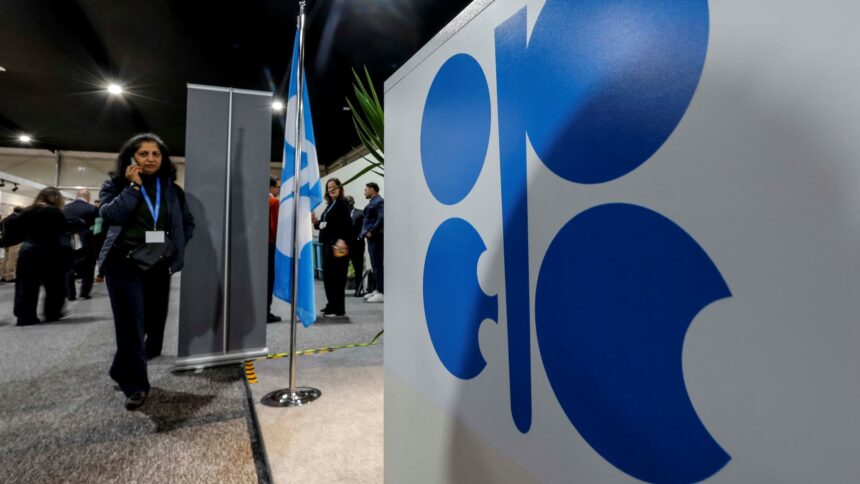
During a recent virtual meeting, the Organization of the Petroleum Exporting Countries (OPEC+) opted to keep oil production levels steady amidst heightened geopolitical tensions impacting its member nations. This decision comes on the heels of a sharp decline in oil prices, which plummeted over 18% during 2025, marking the most significant annual drop since 2020, largely fueled by concerns of oversupply in the market.
The gathering comprised eight of the group’s members—Saudi Arabia, Russia, the United Arab Emirates (UAE), Kazakhstan, Kuwait, Iraq, Algeria, and Oman—who collectively account for approximately half of the global oil production. These allies last diverged publicly over a territorial conflict stemming from a long-standing crisis in Yemen, where recent clashes saw UAE-aligned factions seize ground from the Saudi-supported government. This development has resulted in a notable rift between the historically close partners.
Adding to the geopolitical complications, recent events unfolded in Venezuela, leading to the U.S. capturing President Nicolas Maduro. In a bold announcement, U.S. President Donald Trump indicated plans for American control of the nation, aiming for a transition to a new government, although specifics surrounding this initiative remain unclear.
Industry experts are cautioning that the current dynamics of the oil market are being swayed predominantly by these political instabilities rather than the traditional supply-demand factors. Jorge Leon, head of geopolitical analysis at Rystad Energy and former OPEC official, noted that OPEC+ seems to be prioritizing market stability over making decisive operational changes.
Back in November, the group had already agreed to refrain from increasing oil output in January, February, and March due to diminishing demand during the northern hemisphere’s winter months. This recent online meeting reaffirmed that strategy, without broaching the topic of Venezuela, according to an OPEC+ delegate. The members are scheduled to reconvene on February 1.
Historically, OPEC has navigated internal conflicts, such as the Iran-Iraq War, by placing a higher priority on market stability than on its political divisions. Yet, the group now faces numerous difficulties, including falling Russian oil exports attributed to U.S. sanctions imposed in response to its military actions in Ukraine. Additionally, Iran is grappling with domestic protests alongside threats of U.S. intervention.
As for Venezuela, despite possessing the largest oil reserves in the world—outstripping even those of OPEC’s largest producer, Saudi Arabia—its oil output continues to dwindle due to years of mismanagement and sanctions. Analysts speculate that a revival of oil production in Venezuela remains unlikely for years, even if substantial investments from U.S. oil companies, as suggested by Trump, were to materialize.