OpenAI has introduced its latest artificial intelligence model, GPT-5.2, claiming it is the most sophisticated version yet, specifically tailored for everyday professional applications. This new model purportedly outperforms its predecessors in various tasks, including spreadsheet creation, presentation building, image recognition, code writing, and long-context comprehension. Starting today, GPT-5.2 will be accessible through OpenAI’s ChatGPT chatbot and its application programming interface (API).
This announcement follows the recent launch of the GPT-5.1 model, and comes amid increased competition from other tech giants such as Anthropic and Google, which also unveiled new AI models last month. In response to the competitive landscape, OpenAI initiated a “code red” strategy aimed at enhancing ChatGPT and deprioritizing other projects. This strategic pivot underscores the ongoing race among major tech companies to develop the most utilized AI model as both consumers and businesses integrate AI into their daily operations.
Fidji Simo, OpenAI’s CEO of applications, explained during a Thursday briefing that the code red initiative serves to rally resources around specific priorities, helping the company allocate focus effectively. Though the influx of resources has benefited the development of GPT-5.2, Simo clarified that the timing of the model’s release was not solely driven by recent competitive pressures.
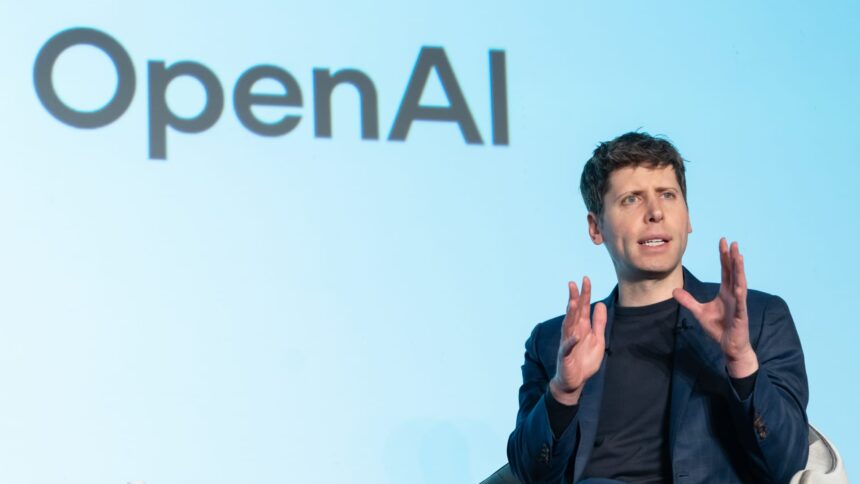
In a separate conversation with CNBC, OpenAI CEO Sam Altman acknowledged that the release of Google’s Gemini 3 model had less impact on OpenAI’s performance metrics than initially anticipated. He expressed confidence that the company would emerge from its code red status by January, emphasizing the need for rapid response to competitive threats.
GPT-5.2 will be available in three versions: Instant, Thinking, and Pro. The Instant variant excels in speed for writing and information retrieval, the Thinking version is geared towards structured tasks such as coding and planning, while the Pro version promises the highest accuracy for complex inquiries. OpenAI has highlighted that GPT-5.2 surpasses industry benchmarks, including SWE-Bench Pro, which assesses coding performance, and GPQA Diamond, a scientific reasoning standard for graduate-level assessment. According to an evaluation called GDPval that OpenAI released earlier this year, GPT-5.2 outperformed or matched top industry professionals on 70.9% of clearly defined tasks.
“This has been in the works for many, many months,” Simo noted, underscoring that the rapid cadence of model releases does not detract from the extensive planning and development that precedes each iteration.
Despite OpenAI’s advancements, competitors like Anthropic have released models such as Opus 4.5, which reportedly outscored GPT-5.2 on the SWE-Bench Verified test, an evaluation aimed at assessing software coding capabilities. However, OpenAI has argued that this benchmark may be less rigorous in terms of contamination resistance, diversity, and industrial relevance compared to its own SWE-Bench Pro.
Founded a decade ago as a research lab, OpenAI has rapidly evolved into a leading commercial entity following the 2022 launch of ChatGPT, now boasting over 800 million weekly users. In an era where AI applications are becoming ubiquitous, OpenAI’s continuous innovations are pivotal in defining the future of artificial intelligence.