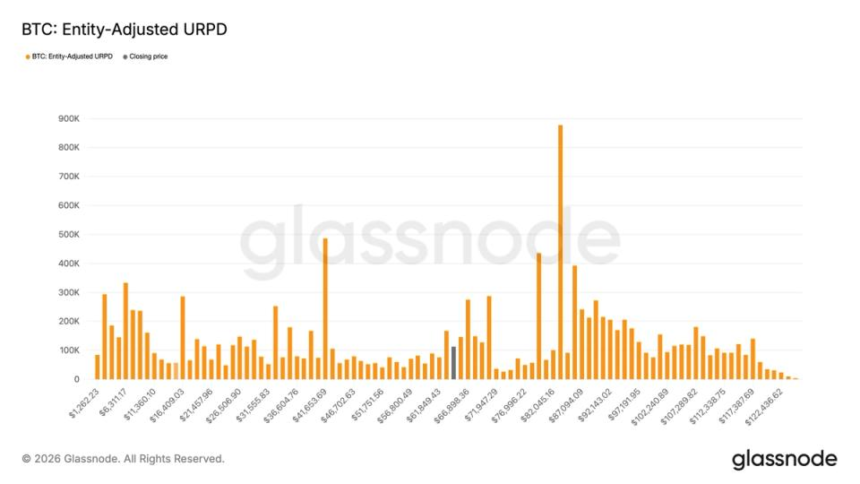
In a notable move reflecting market dynamics, recent data from Glassnode reveals that more than 400,000 Bitcoin (BTC) have been accumulated within the $60,000 to $70,000 price range during the cryptocurrency’s latest downturn. This uptick in acquisitions indicates a robust dip-buying sentiment as Bitcoin’s value experiences significant retracement.
According to the analytics firm, the supply of Bitcoin situated in the $60,000 to $70,000 band has escalated from approximately 997,000 BTC at the start of the year to around 1.43 million BTC today. This marks an increase of roughly 429,000 BTC, equating to an impressive 43% rise. Notably, over 8% of the circulating supply outside exchanges now has a cost basis within this range, culminating in a dense cluster of ownership among investors.
Bitcoin’s price has notably fallen from about $88,000 on January 1 to its current valuation of around $63,000. This drop is part of a larger correction that has witnessed Bitcoin plummet about 50% from its all-time high of $126,000 recorded in October. This market behavior showcases the volatility inherent in cryptocurrency trading, especially during phases of aggressive profit-taking and market reevaluation.
The analysis relies on Glassnode’s Unspent Transaction Output Realized Price Distribution (URPD) metric, which categorizes the existing Bitcoin supply based on the price at which each coin last moved on the blockchain. This particular analysis takes a more refined approach by clustering addresses controlled by the same owner, excluding internal transfers, and removing exchange balances. This methodology provides a clearer perspective on the genuine cost basis of investors.
CoinDesk has referred to the $70,000 to $80,000 zone as an “air pocket,” describing it as a market area where Bitcoin has historically seen minimal trading activity. During the current downturn, the price of Bitcoin fell from $80,000 to $70,000 within just five days—from January 31 to February 5—highlighting the rapid price movements that can occur in regions characterized by thin transaction volumes before reaching more substantial supply concentrations below.