In a move that has sent ripples through the entertainment industry, Netflix’s CEO Ted Sarandos recently withdrew from a competitive bid to acquire Warner Bros., paving the way for Paramount’s winning offer. This high-stakes decision came shortly after Sarandos visited Washington, D.C., likely to assess potential regulatory challenges for the acquisition. With Paramount’s bid already raised, Sarandos faced a critical dilemma, ultimately opting to back out just hours after leaving the White House.
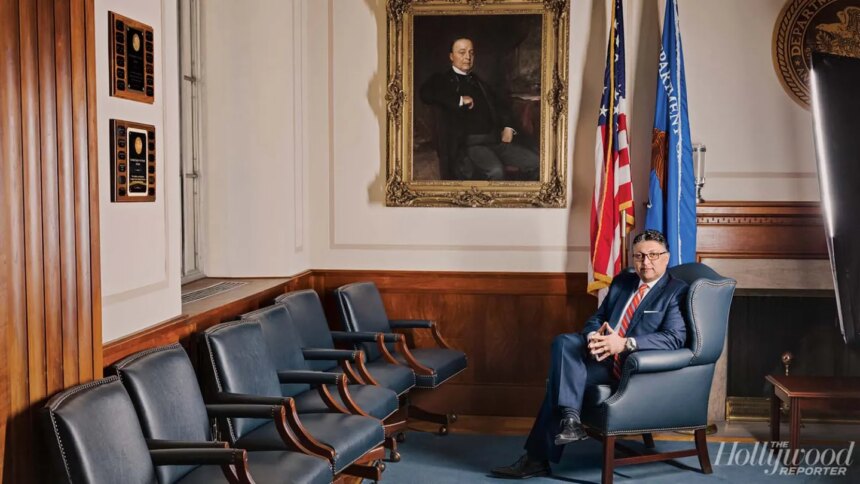
As Paramount now aims for the deal’s finalization, the focus shifts to two significant figures: Makan Delrahim, a seasoned legal operator and architect of Paramount’s merger strategy, and Rob Bonta, California’s attorney general, who is expected to spearhead a coalition of state attorneys general opposing the merger. Legal experts anticipate a prolonged court battle that may redefine the competitive landscape in Hollywood.
In a statement on Thursday, Bonta cast doubt on the merger’s inevitability. “Paramount/Warner Bros. is not a done deal,” he asserted, highlighting that the California Department of Justice is conducting an active investigation and intends to rigorously review Paramount’s acquisition efforts. Discussions are underway with other state attorneys general about jointly addressing the implications of the merger.
Despite Bonta’s proactive stance, Paramount has positioned itself advantageously. It filed for regulatory approval last year and efficiently submitted necessary documentation to the Justice Department, expediting what typically could take over a year into just a few months. The urgency is palpable, as Paramount seeks to close the deal promptly, especially with foreign regulators’ approvals potentially already in the pipeline.
While lawsuits can be filed post-merger, the implications could be significant. If Paramount integrates Warner Bros. into its operations before any legal opposition takes effect, the complexities of unraveling the deal would amplify. Historically, courts have shown more inclination to stymie a merger than to undo one.
Bonta and his colleagues are poised to make a robust case against the merger under antitrust laws. While a claim based on the Sherman Act might be less tenable, arguments referencing the Clayton Act could possess considerable weight. Critics argue that the merger would reduce the number of major studios from five to four, consolidating significant media power.
Moreover, concerns about a ‘monopsony’ – a scenario where a dominant buyer can suppress wages and bargaining power within the labor market – are being voiced. Writers and talent have long warned that media consolidation diminishes opportunities and financial returns for creatives. Mark Ruffalo recently urged state attorneys general to synchronize discussions with Hollywood talents, emphasizing the merger’s potential to stifle industry competition and depress wages.
Aside from workforce implications, the impact on theatrical releases is also under scrutiny. History may provide a cautionary example; Disney’s acquisition of 20th Century Fox resulted in a noteworthy decline in the studio’s annual film output. Paramount CEO David Ellison has committed to a more ambitious production schedule, promising at least 30 releases annually. However, sustaining this pledge may prove challenging in the longer term.
The venue for any resulting legal action could also play a crucial role. While the Central District of California may present a balanced judicial landscape, political undercurrents cannot be entirely disregarded when evaluating how a case could unfold. Experts note that a merger involving companies with vast control over media narratives raises unique concerns about public information distribution and cultural representation.
Consumer sentiment may further complicate matters, as individuals have already launched a lawsuit to obstruct Netflix’s acquisition efforts, raising the possibility of similar actions against Paramount. While these consumer-driven initiatives may face substantial challenges, past legal victories, such as the requirement for a company to divest assets in the door manufacturing sector, demonstrate that consumer interests can occasionally disrupt large-scale mergers.
For Delrahim, the calculus appears less about the merger’s fate and more about potential concessions from Paramount. History suggests that regulatory authorities might be open to compromises rather than outright rejections, providing a pathway for influence over the content creation landscape.
Internationally, the reception of the deal is expected to be more lenient. European regulators have released similar mergers in the past with minimal conditions, focusing primarily on local market dynamics instead of broader implications.
As these developments unfold, Paramount’s leadership must navigate the challenging terrain of substantial financial debt while aiming to implement cost-saving measures that may need to be significantly amplified. The modern media landscape stands on the brink of a transformative event, with potential ramifications stretching far beyond the immediate deal between Paramount and Warner Bros.