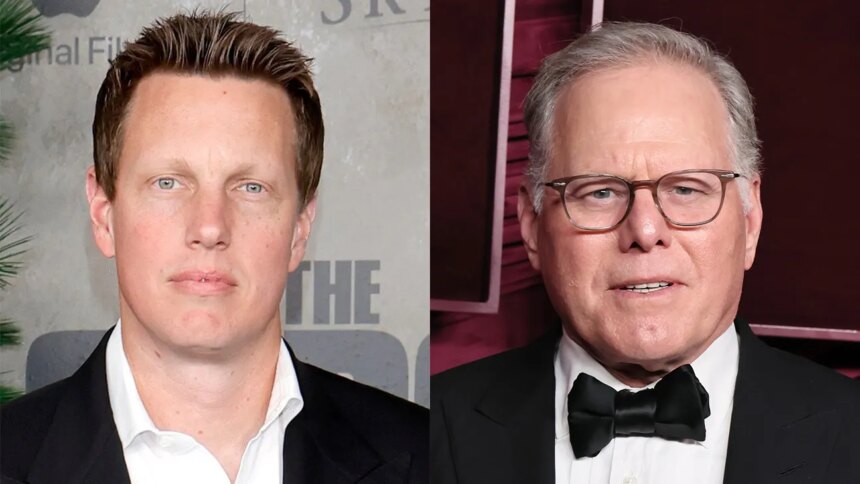
In a landmark move that reshapes the landscape of the entertainment industry, Paramount’s megadeal valued at $111 billion to acquire Warner Bros. Discovery (WBD) has officially been confirmed. The announcement came shortly after Netflix’s withdrawal from the bidding process, citing concerns over financial viability.
David Ellison, a key figure at Paramount, expressed enthusiasm about the merger, stating that the goal has always been to honor the legacies of both companies while fostering the creation of a next-generation media powerhouse. He emphasized the potential to merge their outstanding studios and complementary streaming platforms, ultimately maximizing value for audiences and investors alike. WBD CEO David Zaslav echoed this sentiment, highlighting the successful outcome for shareholders and the significance of this transaction for the entertainment sector.
Under the terms of the deal, Paramount will offer $31 per share for Warner Bros. Discovery. Additional components include a ticking fee of $0.25 per quarter, which will begin accruing after September 30, 2026, increasing the total cost over time if regulatory approvals are delayed. To mitigate the risk of regulatory challenges, a $7 billion termination fee is also part of the agreement, signaling both parties’ awareness of potential hurdles.
The financial framework of the acquisition is backed by $47 billion in equity commitments from the Ellison family and RedBird Capital, combined with $54 billion in debt financing secured from major banks like Bank of America and Citigroup. Paramount has indicated that additional strategic and financial partners may join the equity side at closing, although details have yet to be disclosed. Previous interest in the deal included backing from various global and investment entities.
Paramount anticipates the deal will close in the third quarter of this year, demonstrating a strong belief in its ability to navigate regulatory scrutiny. In preparation, the company has already paid a $2.8 billion termination fee that Warner Bros. owed to Netflix to exit its previous agreement, while the new contract stipulates a $3 billion penalty for WBD should it choose to pursue alternative offers.
California’s Attorney General Rob Bonta has announced an ongoing investigation into the deal, assuring a thorough review process. In response to community concerns, Paramount has made commitments to retain the independence of both studios. The company pledged to produce 15 films annually from each studio, with dedicated release windows for premium video-on-demand content.
Moreover, Paramount insists it will continue to distribute its programming to third parties and remain a content purchaser from outside studios. The company foresees potential synergies totaling $6 billion through technology integration, corporate efficiencies, and streamlined operations.
However, the merger is anticipated to result in significant job reductions within Hollywood, alongside possible sales of redundant assets like studio lots. Both WBD co-CEOs noted their appreciation for the efforts of Warner Bros. management during the bidding process, stressing that their vision would have preserved and created more production jobs within the United States, though they recognized that their interest was contingent upon appropriate pricing.
As this colossal deal unfolds, industry observers are keenly watching its implications for the future of media and entertainment in an ever-evolving landscape.