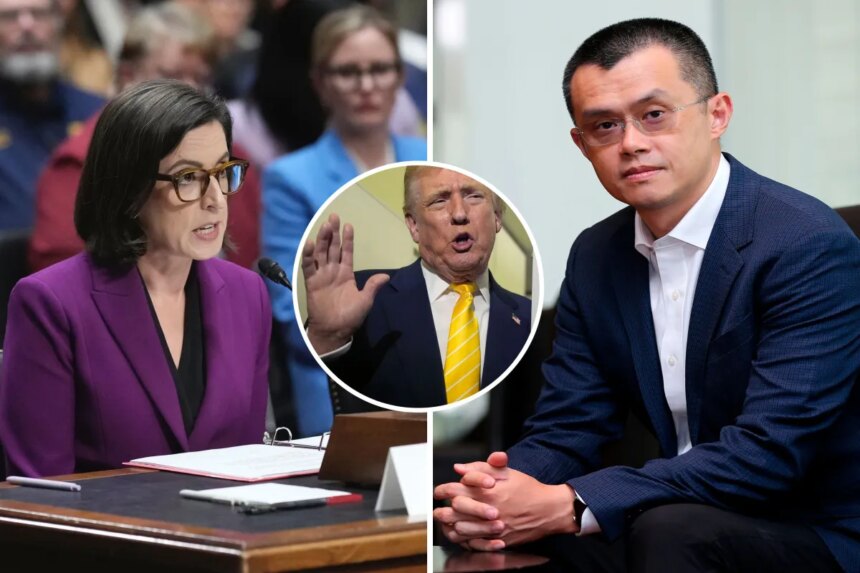
The recent pardon of Changpeng Zhao, the founder of Binance, has ignited fierce debate and intensified scrutiny of President Donald Trump’s use of executive clemency. This development has drawn sharp criticism from former U.S. Pardon Attorney Elizabeth G. Oyer and has raised renewed questions regarding the influence of politics on the Justice Department.
At the heart of the controversy is the broader implication of the pardon, suggesting a shift in how the presidential office exercises one of its most significant constitutional authorities. Critics highlight concerns about conflicts of interest, the bypassing of established safeguards within the Justice Department, and the increasing role that money and political connections may play in decisions that should focus on public welfare.
Zhao, often referred to as “CZ,” is prominent as the founder of Binance, the world’s largest cryptocurrency exchange. After pleading guilty in 2023 to charges related to money laundering oversight, Zhao served a four-month sentence that included a significant financial penalty for the company. His pardon in 2025, amidst scrutiny regarding Binance’s financial ties to a crypto venture associated with Trump, has prompted further investigation into possible motivations behind the executive decision.
Oyer, who oversaw thousands of clemency applications during her tenure and has criticized political influence in the pardon process, voiced her apprehensions about the circumstances surrounding Zhao’s case. In a CBS News interview, she described Zhao’s actions as enabling his company to serve as a venue for financing unlawful activities. She questioned the propriety of the pardon, articulating that Zhao did not meet the Justice Department’s guidelines for clemency and underscoring the unprecedented nature of financial influence involved.
Critics point out that Zhao’s pardon intersects with significant financial transactions, including Binance’s contributions to World Liberty Financial, a firm connected to Trump’s family that used Binance’s technology in its cryptocurrency efforts. Oyer described the financial entanglement as historically unprecedented and indicative of serious corruption, stating, “This is absolutely not justice. This is corruption.” Reports indicate that investments linked to Zhao have propelled the previously obscure digital currency into prominence.
In response to inquiries about the pardon, Trump claimed he did not know Zhao personally, stating that he had been informed of Zhao’s alleged persecution by the Biden administration. White House Press Secretary Karoline Leavitt dismissed allegations of conflicts of interest. Eric Trump, defending his father, stated that they had no financial ties to Zhao.
Beyond Zhao’s pardon, Oyer’s own dismissal from the Justice Department has stirred concerns. She has alleged that her firing was connected to her refusal to support a request regarding actor Mel Gibson’s gun rights. Oyer expressed her commitment to speaking out against perceived corruption within the Justice Department, recounting a troubling incident in which U.S. Marshals were reportedly sent to her home after her congressional testimony.
Ethical concerns regarding Zhao’s pardon were echoed by legal scholars like Harvard’s Lawrence Lessig and constitutional expert Michael Gerhardt, who emphasized the risks of intertwining private interests with presidential decision-making. Oyer warned that this trend could lead to a significant erosion of democratic principles, favoring the wealthy and well-connected over deserving clemency candidates.
Responses to this unfolding situation are likely to deepen, with calls for congressional scrutiny, litigation, and public debate surrounding the implications of Zhao’s pardon and the Justice Department’s integrity. Oyer’s efforts to challenge the circumstances of her dismissal may lead to critical revelations about internal practices and potential misconduct. Key questions linger around how the White House will address allegations of impropriety and whether this issue will catalyze a broader examination of executive power and the independence of the Justice Department moving forward.