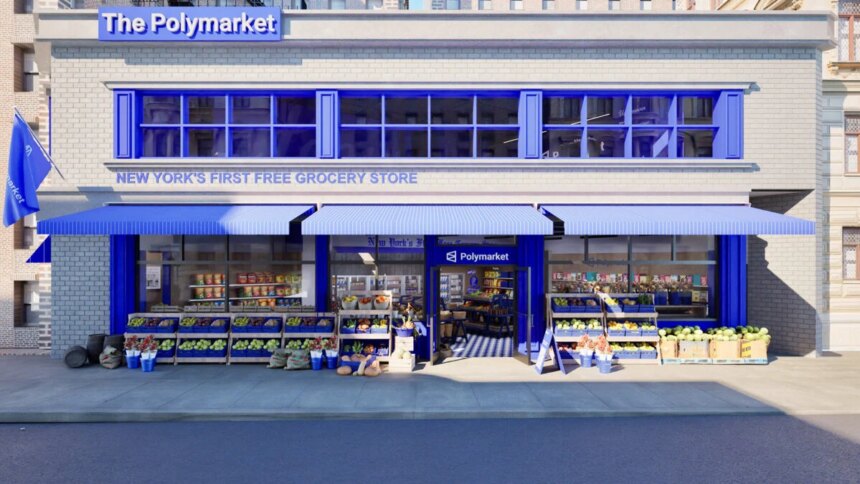
Polymarket has announced plans to launch what it describes as “New York’s first free grocery store,” drawing attention to freshly elected New York City Mayor Zohran Mamdani’s initiatives aimed at establishing low-cost city-operated grocery outlets in food deserts across the boroughs. This promotional endeavor has sparked dialogue, particularly on social media where the Mayor promptly reacted to the unusual campaign.
In his response, Mamdani opted for a viral approach, sharing a screenshot of an article from The Onion that read, “Heartbreaking: The Worst Person You Know Just Made a Great Point.” This choice highlighted his disapproval without needing to elaborate with additional commentary. Following his reaction, Polymarket extended an invitation for the Mayor to join them, stating they had attempted to reach out for a collaboration.
It’s important to note that Polymarket’s “free grocery store” is merely a temporary event rather than a long-term installation, as is the intention behind Mamdani’s city-run grocery initiatives. Although Polymarket has reportedly signed a lease for this venture, details regarding its location and specifics remain undisclosed. Their offering marks just a five-day pop-up experience. Not to be outdone, competitor Kalshi has also rolled out promotions, providing $50 worth of groceries to individuals at a Westside Market venue in the East Village during a brief window on Tuesday.
These promotions can be interpreted as strategic marketing efforts aimed at enhancing brand perception amidst a backdrop of public scrutiny. Recently, both prediction markets have faced criticism, particularly with allegations of insider betting involving government officials and revelations that bettors tend to lose money quicker than users of conventional gambling platforms.
The timing of these announcements is notable, occurring just before major betting events such as the Super Bowl, which could amplify their exposure. However, the legal landscape for prediction markets continues to be fraught with challenges. Despite a shift toward legality following Trump’s 2022 election, the industry remains under investigation. Kalshi, for example, is currently contending with nineteen lawsuits at the federal level.
New York has emerged as a critical area for prediction markets. In late October, the New York State Gaming Commission accused Kalshi of conducting an illegal betting operation. Shortly thereafter, New York State Representative Clyde Vanel introduced the ORACLE Act, a bill aiming to prohibit certain bets within the state, particularly those related to politics and sports— popular aspects of prediction markets.
On the eve of Kalshi’s announcement, New York Attorney General Letitia James issued a consumer alert concerning prediction markets. She cautioned that advertisements promoting unlicensed sports betting not only violate state gambling laws but could also attract civil and criminal liabilities. In her notice, she emphasized that these markets may appear to be innovative speculative platforms, yet they often function as unregulated gambling entities, lacking the protections that consumers rightfully expect from duly licensed operators in New York.